31 Days Of Horror: The Wolf Man

The Wolf Man (1941) is considered to be the third big Universal monster film, even though it wasn’t released until a decade after Dracula and Frankenstein, when there had already been several sequels to those first two films.  This makes it even more impressive that the monster captured the imagination so much.

The Wolf Man
This DVD cover doesn’t photograph that well, but the film looked really crisp on our 2010s TV.

The opening credits show us some clips of the characters, so that we know who’s who.  Claude Rains (of The Invisible Man fame) plays Sir John Talbot, while Lon Chaney Jr plays his son Larry.  This is slightly bizarre casting, as not only do they look absolutely nothing alike (Chaney is about a foot and a half taller than Rains, for a start), there doesn’t seem to be much between them in age.  (There were actually seventeen years between the two actors, but Chaney had not aged well and hence looks nearly as old as his ‘father’!)

Meanwhile, Bela Lugosi plays a gypsy called Bela, which is fairly unoriginal naming.  This is quite a minor part, and a fairly big step down from playing the lead in Dracula a decade earlier.

We open with a shot of the dictionary definition of lycanthropy.  This isn’t really necessary, as werewolves will be thoroughly explained within the film.

The story opens with Larry Talbot arriving home to his father, Sir John Talbot, at the family country pile in England.  Larry has spent the last eighteen years in the US, a plot point that is presumably meant to explain his accent (there are some fairly poor attempts at British accents in this film, but I guess Chaney didn’t fancy being one of them).

Sir John has been building a telescope.  Larry has been working for an optical company in California, so is able to fix some minor problems with it.  He immediately makes use of the telescope by perving on the girl in the house across the street, which is super creepy now but was apparently fine and dandy in 1941, as it’s presented as nice normal harmless fun for young men to partake in.

The costumes scream early ’40s, placing the film in a setting contemporaneous to its release.  This is quite refreshing after the vague faux-Victoriana of all the other old films I’ve been watching during this horrorthon.

Larry goes to the shop below the girl’s house to meet Gwen Conliffe in person, and engages in more creepy flirting, telling her he’s psychic and hence knows what earrings she has in her room upstairs.  Gwen’s not having it, thankfully.  Larry buys a creepy cane with a wolf head on, causing Gwen to launch into a rhyme about werewolves, and insists on picking her up at eight despite her refusal.

Back at the Talbot house, the cane is shown to be far too short for Larry, unintentionally providing the film with a rare bit of comedy!  Sir John, after reciting the werewolf rhyme at the sight of the cane, appears to encourage his son’s interest in Gwen, which is slightly uncomfortable.

At eight, Gwen shows up for the date, despite having refused Larry earlier…but it turns out it’s just because she wants to bring her friend Jenny along, as Jenny wants her fortune told by the gypsies who have just arrived in town.

Jenny recites the same rhyme about the werewolves.  Why does everyone in the locality know this rhyme?  ‘Everyone knows about werewolves!’ says Gwen, but it’s not explained why.

While Jenny is consulting with Bela, the gypsy fortune teller, Larry and Gwen go for a walk, and Larry confesses to having spied on Gwen with the telescope.  Gwen is only marginally annoyed by this revelation, but explains she’s engaged to Frank Andrews, the gameskeeper for the Talbot estate.

Bela has a very ominous reading for Jenny, with lots of accompanying overacting.  He sees a pentagram sign appear in her palm, and tells her to run.  She does so, but is soon killed by a wolf in the woods.  Larry, hearing Jenny’s scream, chases after her and kills the wolf, but not before getting bitten himself.  Gwen soon finds the unconscious Larry, and an old gypsy woman comes to their aid.  As they arrive back at the Talbot estate, the news comes that Jenny’s been found murdered.  Bela is also dead – murdered using Larry’s cane.

In the morning, Larry’s wolf bite has disappeared.  Resident police chief constable Montfort and family doctor Dr Lloyd at first seem to be fairly certain that Larry killed Bela, but this is soon forgotten for plot reasons.  Larry follows Bela’s hearse to the crypt and looks inside the coffin, but is interrupted by the gypsy woman arguing with the priest, as she wants a traditional gypsy funeral celebration.  Larry overhears her speaking some words over the coffin about Bela now being at peace from his suffering.

Gwen is disturbed by Jenny’s death and won’t take her father’s advice to rest.  As Gwen sits in the parlour, Jenny’s mother shows up at the shop, and turns out to be a right moralising cow, accompanied by a gaggle of similar-minded women.  She has a good go at Mr Conliffe about Gwen being out with a man who’s not her fiancé, and blames Gwen for Jenny’s death.  Larry then arrives and gets rid of the women, as he wants to see Gwen.  Before they can talk much, Frank shows up, also wanting to see Gwen, and his dog starts barking manically at Larry.  Larry correctly realises it’s time to leave.

That evening, everyone in town goes to the gypsy carnival.  At the shooting range, Frank challenges Larry to a game, but Larry finds he can’t shoot the wolf image that pops up.  Weirdly, Larry is being observed by his father, who’s accompanied by Montfort as usual.

Larry goes to see the gypsy woman.  She explains that Bela was a werewolf, and that the wolf Larry killed was Bela in wolf form.  Larry doesn’t believe any of it, but the woman gives him a charm to protect him.  As Larry leaves the tent, Montfort is shown watching a crowd of gypsy women hurriedly preparing for something.

Gwen is wandering the carnival by herself when Larry finds her, as she and Frank have apparently had a quarrel.  Larry gives her the charm, then kisses her, because who cares that she’s engaged to someone else, right?  Gwen runs away when they’re interrupted by the gypsy chaos, and Larry then has a weird montage vision of lots of strange images.

Larry gets home and transforms into the Wolf Man, with the transformation effect shown through his feet gradually getting hairier.  I guess it was the best they could do in 1941.  As a wolf, he kills the graveyard worker Richardson.  Dr Lloyd and Montfort find the body, along with some animal tracks leading away from it.

Larry wakes up in different clothes (why did the Wolf Man bother to change clothes?) and finds his wolf bite is now visible, but looks like someone has drawn a star on him in biro.  He hides the evidence of the muddy tracks in his bedroom, and shrinks back from the window when he sees Montfort looking at the tracks in the garden.

At the local church, Jenny’s mother is now spreading the rumour that Larry is the murderer.  There’s then a slightly unnerving sequence where everyone stares at Larry when he doesn’t sit down in the pews.  Instead, he leaves the church building.

Later that morning, Sir John, Montfort, Dr Lloyd and Frank are having a debrief about the wolf killings.  Larry comes in and tells the other characters that it’s a werewolf.  Frank and Montfort are sceptical and go off to set traps in the woods.

That night, the Wolf Man is caught in one of the traps, but the gypsy woman casts a spell to turn him into Larry again and releases him from the trap before the police dogs can find him.  When the estate staff ask him what he’s doing in the woods, he claims to be hunting the wolf too, which is a pretty poor lie seeing as he’s barefoot and disorientated.  Nevertheless, they don’t question him, because apparently the son of Sir John Talbot can do whatever he likes.

Larry throws a stone at Gwen’s windowframe to get her to come downstairs, and tells her he’s running away.  She wants to come with him (poor Frank!  I think he needs a better fiancée), but he sees the pentagram sign in her palm: the sign of the next victim.  Larry runs back home, and Sir John tries to ease Larry’s mind by tying him to a chair so he won’t escape.  Larry begs his father to take the cane with him when he goes out to the woods, so as to protect himself.

The gypsy woman is out in the woods doling out sensible advice, but nobody listens to her.  The Wolf Man inevitably gets out and attacks Gwen, who is looking for Larry; Sir John then beats him to death with the cane, and in front of him, the gypsy woman casts the same spell she did over Bela’s coffin to turn the Wolf Man’s body back into that of Larry.  (This is a huge plot hole – Bela turned back from a werewolf into his usual self after he died, because when his body was found, nobody noticed anything out of the ordinary.  So why did the gypsy woman need to cast the spell over the coffin?  And why does she need to cast the spell now to turn Larry’s werewolf body back into a human one?)

Displaying the same kind of logic he’s been doing all film, Montfort arrives on the scene and declares, ‘The wolf must have attacked her [Gwen] and Larry came to the rescue.  I’m sorry, Sir John.’  The End!  It’s a bit of an abrupt, confusing ending, so I’m quite interested to see if the sequels provide any further explanation.

Back to the ’80s tomorrow!

31 Days Of Horror: The Phantom Of The Opera

The Phantom Of The Opera (1925) is the second silent film in this month’s horrorthon.  I’m always interested to see what the backing track is on the DVD for these films!

Before we start, though – if you’ve been reading this blog for any length of time, you’ll know I can never resist a gratuitous ’80s music video, and when it comes to The Phantom Of The Opera, the Now! ’80s channel has been amply providing recently, with lots of videos made for songs from the Andrew Lloyd Webber musical version.

One of the videos they’ve been playing is this super saccharine performance of All I Ask Of You, with Sarah Brightman singing the Christine part (as ever – she also played the role in the stage musical) and Cliff Richard singing the Raoul part.  Try not to watch the gross and awkward kiss in the middle of the video.  Ewww!

Another one that comes on all the time is the video for the title song, with Sarah Brightman as Christine again and Steve Harley (he of ’70s glam rock fame as frontman of Cockney Rebel) as the Phantom.  Apparently he was meant to play the Phantom in the stage musical but got acrimoniously replaced by Michael Crawford.  Geth absolutely hates Steve Harley’s performance and won’t stop ranting about it whenever the video comes on!

Um, yeah, so we weren’t meant to be talking about the 1986 musical version, were we?  I don’t think the 2004 film of the musical even counts as a horror film.  I suppose we should crack on with watching the 1925 version.

The Phantom Of The Opera
The scene that this image represents is nowhere near as epic in the actual film.

The Phantom, in this version, is played by Lon Chaney, not to be confused with his son Lon Chaney Jr who played the Wolf Man and various other characters in the Universal monster movies during the ’30s and ’40s.  Chaney Sr pulls off a brilliant performance, and is the best thing about the film.

The backing music on this DVD version is great from the off!

The setting for the story is the Paris Opera House, which was built over mediaeval torture dungeons.  Usually in a horror film, I would ask why someone was stupid enough to build over somewhere that’s clearly going to be haunted, but I’m from Edinburgh, where the whole city is basically built over blocked-off medieval plague streets.  In crowded European cities, that’s just the way it rolls – when you run out of space you start building on top of yourself.

There’s a pretty scene at the start with lots of ballet dancers on the stage, and appropriate performance music.  Meanwhile, a deal is being done in a side room – the Opera House is being sold.  The new owners are told about the ghost, but they laugh it off in glorious ’20s silent overacting style.

We’re introduced to the mystery of the cloaked figure in Box Five – apparently seeing his back is so terrifying that the owners run away at first, then find he’s disappeared when they look again.

We then cut to a fairly farcical sequence with about twenty ballet dancers running around the dungeons, frightened of the Phantom, and it’s not very clear what’s going on.  ‘The Phantom is up from the cellars again!’ says one.  One of them claims he has no nose (and I’m disappointed that nobody makes the classic ‘how does he smell?’ bad joke – maybe it hadn’t yet been invented in 1925), but another rebuts, ‘Yes, he did, it was enormous!’, indicating that the dancers probably haven’t actually seen the Phantom.  A suspicious-looking man then appears from the cellars and goes upstairs, to the confusion of the dancers.  During this sequence, they all run about in a pack, looking like little girls at play in their party dresses, which is a bit alarming given that they’re meant to be grown women.

The dancers speak to Joseph Buquet, one of the opera stagehands, who’s the only person who’s actually seen the Phantom.  He launches into a florid description of holes in a grinning skull, yellow skin etc. – suffice to say the Phantom’s pretty ugly.  Buquet also confirms he’s got no nose.  Another stagehand tells Buquet off for riling the ghost.  Anyway, Buquet shows them where he saw the Phantom, and all the others look terrified and run off, resulting in another few minutes of balletic running.  There’s then another farcical bit with the fleeing stagehand accidentally climbing up through a stage trapdoor and getting chased off by some other workers.

Some dramatic music announces the formidable mother of Carlotta, the prima soprano at the Opera House.  The Phantom has written to Carlotta, threatening her and expressing desire for Christine Daaé to sing the part of Marguerite in Faust instead.  Despite the mother’s assertions that Carlotta won’t be threatened by ghosts, her daughter falls ill on the night – the Phantom apparently has some kind of supernatural power.

I still absolutely love this dynamic soundtrack – during the scene with Christine performing Marguerite, we get a track of operatic singing (I don’t know the opera but I presume the song is indeed from Faust), which is the only voice heard over this silent film.

There’s some mild drama with Philip de Chagny, brother of Comte Raoul de Chagny, suspecting Christine of being unfaithful to Raoul, but this isn’t really followed up.  Raoul is not a very exciting love interest, but at least he’s not performed by Cliff Richard in this version.  Boringly, he wants to get married straight away; Christine says she wants to stay in the Opera instead, because women couldn’t do both back then.  Raoul leaves, and we see that a strange ‘melodious voice’ is speaking to Christine.  ‘Tonight, I placed the world at your feet!’

We get another scene with Carlotta’s mother and her signature music.  Carlotta is still being threatened, as are the opera owners (‘You will present Faust in a house with a curse on it!’).  Neither feel particularly threatened (the mother thinks it must be Christine’s friends), and so Carlotta appears as scheduled.  Raoul receives a note from Christine during the performance, telling him not to contact her again.

The ‘curse’ makes itself felt – the stage lighting starts playing up, and the opera house’s giant chandelier falls on the audience, causing panic.  Among the confusion, there’s a bizarre faceoff between Raoul and the suspicious-looking man from earlier, where they just stare at each other for a few seconds.  Raoul hides in Christine’s room and overhears a conversation between her and the Phantom.  Christine goes through a secret mirror passage, which closes before Raoul can see where she went.

The Phantom approaches Christine, wearing a strange featureless mask.  Apparently he’s ‘brought her the gift of song’, suggesting that she’s only able to sing so well because he’s cast some sort of spell.  Christine seems hypnotised or somesuch, and faints.  The Phantom loads her onto a horse that just conveniently happens to be standing there, and leads the horse away.

The Phantom takes Christine to his lair via boat across a hidden black lake, leading to a very pretty shot with her veil trailing in the water.  In the lair, he declares his love in a very creepy way, and Christine runs off.  She’s confronted by a large coffin in the side room.  Apparently the Phantom sleeps in the coffin to remind himself of the sweet, sweet death that will come one day.  He’s not a wannabe vampire, more of a proto-goth.

‘You’re the Phantom!’ gasps Christine, who’s apparently a bit slow on the uptake.  ‘If I am the Phantom, it is because man’s hatred has made me so…if I shall be saved, it is because your love redeems me!’ claims the Phantom.  Apparently his real name is ‘Erik’.  This news causes Christine to faint again.  I can’t stand these early female film characters!

We then get some pictures of newspaper headlines, which seems to have been a fairly common technique in silent film.  ‘Christine Daaé Disappears Following Chandelier Disaster’.

Following a ‘night of vague horrors and tortured dreams’, Christine wakes up to a display of about six pairs of beautiful OMG SHOES!  That would totally have won me over.  Not so much the bridal veil and dress, which are totally creepy.  The Phantom has left her a note, explaining ‘You’re in no peril as long as you don’t touch my mask’.

In comes the Phantom’s creepy organ music, which is the music most iconic to the story as far as I’m concerned!  It seems to hypnotise Christine.  The Phantom says the piece is Don Juan Triumphant (again, I’m not familiar with that piece of music so I don’t know if the organ music on the soundtrack actually matches this), apparently to signify love being triumphant, but with an ‘undercurrent of warning’.  How romantic.

Christine, ignoring the note’s warning, rips the Phantom’s mask off at the dramatic climax of the music!  The Phantom’s ‘deformed face’ makeup is brilliant, and was apparently created by Lon Chaney himself, who came from the old theatrical tradition where actors did their own makeup.  Contrary to Joseph Buquet’s assertion, he does have a nose.  ‘Feast your eyes, glut your soul on my accursed ugliness,’ moans the Phantom, whose dialogue apparently gets even more pretentious when he’s not wearing his mask.

Christine begs to leave, and the Phantom agrees, in order ‘to prove [his] love’.  ‘But remember you are mine – mine – and you shall not see your lover again!  If you do, it is death to you both!’  Charming guy.  The frightened Christine agrees, but immediately breaks her promise by sending a note to Raoul, telling him to meet her at the Bal Masque de l’Opera.

We get a medieval calligraphy caption introducing the setting of the Bal Masque de l’Opera, and the footage for this sequence is colourised in this version, showing the attendees’ pretty costumes.  Unfortunately, the Phantom shows up in costume to spoil the party.  ‘Beneath your dancing feet are the tombs of tortured men – thus does the Red Death rebuke your merriment,’ he informs the partygoers, cheery as ever.

Christine and Raoul miss this doomy pronouncement, because they’ve escaped to the roof of the Opera House for a private conversation.  ‘Are we alone, Raoul?’ asks Christine.  Why’s she asking him?  Can’t she judge for herself?  Anyway, she tells Raoul about the Phantom…who also happens to be on the roof with them, having apparently hotfooted it from the main floor of the building.

Christine explains that the Phantom has put an illness curse on Carlotta again, meaning that Christine will be playing Marguerite the next night.  How is the Phantom managing this?  He’s clearly not a supernatural being, just a deformed man.  Christine and Raoul plan to flee to England as soon as the performance is over.  ‘She has betrayed me!’ wails the Phantom to himself.  Why is this a surprise?  Did he actually think his actions had won her over?

The suspicious-looking man is still creeping around.  ‘Not that way, this way,’ he says to Raoul and Christine as they come down from the roof.  There’s then a strange scene where a partygoer, who is fencing in costume as a musketeer, recognises the Phantom despite the latter’s costume and immediately faints.  Silly, but I’m glad to see it’s not just the women randomly fainting in this film!

The suspicious-looking man comes to speak to the opera house owners.  Ah!  He turns out to be some kind of detective, and delivers them a letter.  The Phantom, or ‘Erik’, is apparently an escaped violent criminal who was previously incarcerated.

Before the performance, Christine tells Raoul that the Phantom knows their plans – she has heard his voice again.  She begs Raoul to save her; he’s sure the escape will be straightforward.

Down in the cellars, a hanging body freaks the main stagehand out.  ‘Come quick!  The strangler’s work again!’  There’s more group running, this time with stagehands instead of ballet dancers, but the body has been moved to the floor – it’s Joseph Buquet, who ‘knew too much about the Phantom’.  His brother Simon vows to hunt the Phantom down.

We basically get lots of free tracks from Faust on this soundtrack, with both Christine and Carlotta singing various numbers as Marguerite.

While Christine is onstage, the Phantom grabs and kills one of the owners and appears in his place in the viewing box, causing Christine to scream.  Her Marguerite wig is found on the floor in the confusion – she’s gone again.  While Raoul is investigating the secret mirror, he’s joined by the detective, who introduces himself as ‘Ledoux of the Secret Police’.

Ledoux tells Raoul that the dungeons are ‘where he [the Phantom] himself was confined during the second revolution’.  This throws the setting of the story into doubt.  Up until now, due to the the fact that the costumes look very 1890s, I assumed that it was set around the turn of the century.  If the ‘second revolution’ – which can apparently refer to either 1792 or 1830 – is within living memory, it must be set earlier, which completely contradicts the costuming.

In the cellars, there are lots of people wandering about.  Raoul’s brother Philip is hanging around with a lantern, and some random stagehands are down there too.  Ledoux somehow knows that Joseph discovered a trapdoor, which is why he got killed.

The Phantom, as expected, is angry with Christine.  ‘You have spurned the spirit that made you great!’  He then launches into a rant that’s so florid I can’t tell whether he’s threatening to rape her or hypnotise her into loving him.

Meanwhile, Raoul and Ledoux fall ten feet down a hole to the cellar below, but they’re both perfectly fine.

‘I am human like other men – I will not be cheated of my happiness!’ rails the Phantom, which is horrifyingly reminiscent of the kind of creeps you get in today’s society who think they’re somehow owed sex and affection from women.

The Phantom overhears Philip, who has found the black lake, shouting for Raoul.  The Phantom leaves Christine alone in the lair, wades into the water (ew), and goes snorkelling.  Raoul, in another part of the cellar, calls for Christine, and she hears his voice through the wall.  Meanwhile, the Phantom overturns Philip’s boat and kills him by drowning (how come nobody in these older films can ever swim?).

Raoul and Ledoux, on the other side of the door to the lair, tell Christine to look for the keys.  Unfortunately, before she can find them, the Phantom returns with a campy villain line (‘The callers have departed.’) and returns to his seat at the organ.

Simon Buquet has discovered the Phantom’s hiding place and organises an angry mob of stagehands, so we get a nice ‘flaming torches’ procession going into the Opera House.

The Phantom catches Christine with the keys and then overhears Raoul in the next room.  He’s apparently super prepared for such eventualities and turns up the heat, trapping Raoul and Ledoux.  We get some great juxtaposition here between the three sequences of the angry mob, Raoul and Ledoux, and Christine and the Phantom, which are all colourised differently.

‘What do you offer for their lives?’ asks the Phantom.  Ledoux finds an escape hatch from the overheated room, but the next room’s full of gunpowder.  There’s then a weird sequence with some controls shaped like a scorpion and grasshopper, which the Phantom forces Christine to choose between – the scorpion to save Raoul’s life and submit to marriage with the Phantom, and the grasshopper to blow the whole Opera House up.  She eventually chooses the scorpion, but it causes the water from the lake to flow into the gunpowder room.  Christine begs the Phantom to rescue Raoul and Ledoux from drowning.  After he’s done so, the angry mob arrive in the lair.

The Phantom runs off with Christine.  Raoul, at first, is too weak to go after them, but after a moment he and Ledoux give chase alongside the angry mob.  The Phantom steals Raoul’s waiting carriage, driving off with Christine in the back, but Christine escapes the carriage by jumping out.  Before the Phantom can retrieve her, the mob catches up with them and Raoul runs to Christine’s side.  We then get a chase through Paris with all its pretty architecture (well, actually through a Hollywood studio set, presumably, but they did Paris quite well).

The Phantom is killed by the mob and thrown in the Seine, and we get the ‘Finis’ screen.

In addition to the original film credits, we also get some credits for this particular version – apparently the soundtrack was done in the ’90s by a Canadian company.  They did a really good job!

One sidenote is that I want to read the original book now – I think it would help me to make more sense of the story.

Another old film tomorrow!

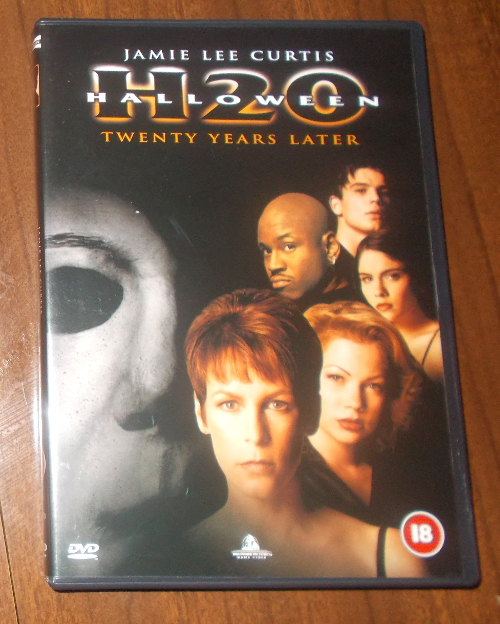
31 Days Of Horror: Halloween 2018

So, I just got back from the cinema, where Geth and I spent the afternoon watching Halloween 2018 (2018)!

Halloween 2018 cinema tickets
Cinema tickets for my collection!

I’m really glad I got to go see this film on opening day, because I’ve been looking forward to it for months, and it was part of the reason that I decided to do a month-long horror film watchathon this year.  It’s the eleventh Halloween film, but it’s the first one since the original where John Carpenter has been involved in creating the story, and so in some ways it’s more of a true sequel than any of the ones that came before it.

In what is now becoming a cosy Halloween series tradition, the continuity is rebooted yet again.    Furthermore, unlike the Thorn continuity and the H20 continuity, this continuity also decanonises Halloween II.  So, to recap:

  1. Laurie Strode now did not get chased around a hospital the night of Hallowe’en 1978 after she’d survived Michael Myers’ first attack.  Michael did not kill the staff of that hospital, and Dr Loomis did not set a room on fire, seemingly killing both himself and Michael.
  2. Laurie Strode most definitely did not have a daughter called Jamie in 1981 and then die with Jamie’s father in a car crash in 1987.  There was no Thorn cult trying to use Michael and anyone related to him for bizarre rituals.
  3. Laurie Strode did not fake her death in a car crash sometime before 1981, move to California and change her identity to Keri Tate, get married, have a son called John in 1981, get divorced, and become the headmistress of a private boarding school.  She also did not get locked in a sanatorium for three years between 1998 and 2001 and then get killed by Michael on 30 October 2001.
  4. Laurie Strode, thankfully, absolutely did not get adopted by the Strodes after originally being Angel Myers, was not an unlikeable idiot, and did not go mad after suffering hallucinations of a woman in white and a horse.
  5. Most interestingly of all, Laurie Strode is not the sister of Michael Myers.  This is the only sequel other than Halloween III that has not gone with the story of them being brother and sister, and that’s only because Halloween III was a completely different story set in a completely different universe.

Instead, in this continuity, Laurie Strode has remained in Haddonfield for forty years, suffering from PTSD, has been divorced twice, and has a daughter and granddaughter.  Michael Myers was captured shortly after doing his disappearing act from the garden of the Doyle house, was taken back to Smith’s Grove sanatorium, and has been held there for the intervening forty years.  Dr Loomis passed on his knowledge to another British doctor, Dr Sartain, before he died at an unspecified point in time.  Michael, prior to the events of this film, only murdered five people: his sister Judith Myers; an unnamed truck driver during his journey to Haddonfield; and Laurie’s high school friends Annie, Bob, and Lynda.

There’s a lot of interesting stuff going on with this film!

Callback to Halloween: the opening credits are exactly the same as the first film, except that the pumpkin starts off rotten and gradually returns to a fresh state.  Creepy!

The film starts off with a couple of British investigative journalists, Aaron and Dana, visiting Smith’s Grove.  They’ve been looking at the case (they specialise in shining new light on historical murder cases) and meet up with Dr Sartain, who trained under Dr Loomis and has been Michael’s doctor for many years.

Callback to Halloween 4: Michael is about to be transferred to a different sanatorium (that’s always a good idea!).  This is because the state have apparently got bored of studying him, and are planning just to let him rot somewhere for the rest of his life.

Aaron and Dana, who are clearly idiots, have managed to get hold of Michael’s original mask, and when Dr Sartain takes them to meet Michael, Aaron presents it to him, trying to get him to speak.  Dr Sartain explains that Michael can speak but just chooses not to.  Undeterred, the journalists head off to try and get an interview with Laurie Strode, who has been living in an isolated house for many years.  Laurie grants them an interview in exchange for $3,000, but tells them to get lost when they start asking questions about why she lost custody of her young daughter.

We’re introduced to Laurie’s family – daughter Karen, son-in-law Ray and teenage granddaughter Allyson.  Allyson wants her grandmother to come to a meal out that the family are having to celebrate Allyson’s success at school and to meet her boyfriend Cameron.  Karen claims to have invited Laurie and that Laurie can’t make it, but she’s clearly lying.

We get a lot of sequences of Laurie practising in a makeshift shooting range, showing that she’s been preparing to face Michael again for forty years.  Everyone, especially her family, thinks she’s kind of nuts.

Allyson walks to school with her friends, Vicky and Dave, and we get the backstory infodump.  Apparently Karen is lying about Laurie being able to come to the meal out because Karen doesn’t like having her around – the reason that Laurie originally lost custody of Karen was because she was bringing her up based on her fear of Michael’s return, training her to shoot guns and so on.  Dave has heard that Michael was Laurie’s brother, and Allyson denies this, saying that it was just something people made up to try and explain things.  Aside from being a slight fourth wall dig at all the sequel filmmakers who went with the family connection story, I think it’s very interesting that John Carpenter always saw things differently.

At school, Allyson meets up with boyfriend Cameron.  He’s okay about coming to the meal that night, but is more excited about the following night, when they’re going to be attending the school Hallowe’en party dressed as Bonnie and Clyde.

Callback to Halloween: Allyson is taking a philosophy class in the exact same classroom as Laurie did in the first film.  The classroom hasn’t changed at all and the teacher (voiced by original Lynda actress PJ Soles!) is still talking about fate.  We then get Allyson looking outside for the traditional spotting-Michael-outside-the-window, but in this film, it’s not Michael – it’s Laurie watching her from outside.

Back at Smith’s Grove, Michael is offloaded onto an ambulance with a bunch of other patients.  Dr Sartain, either heroically or stupidly, gets on the bus with them, because he believes that Michael is his responsibility right up until the moment he’s transferred to a new doctor.

At the family meal out that evening, Cameron is making a good impression on Allyson’s dad Ray, but Laurie arrives late, having driven to Smith’s Grove to watch the bus leave the sanatorium.  This has really shaken her, and she starts crying at the dinner table, causing general awkwardness.  I really love the characterisation and dynamics between the family – they’re all sympathetic, and you can understand everyone’s point of view.

On a quiet road, a kid and his dad have to stop the car suddenly, because the bus from Smith’s Grove has crashed (who didn’t see that coming?).  The dad goes off to investigate and is never seen again (the first of many offscreen deaths in this film).  The kid, after calling the police, gets out of the car with a shotgun, goes to investigate the bus, accidentally shoots Dr Sartain (who has survived the crash), panics, runs back to the car, and gets killed by Michael, who’s waiting in the backseat.  I don’t think I’ve ever seen such a young character (the kid looks about eleven or twelve) get killed in a slasher before!  The police find the bus crash scene, and Dr Sartain turns out to be alive, mumbling about someone having escaped.

The next morning, at the Haddonfield graveyard, the journalists are being shown Judith Myers’ gravestone.  Aaron, who is definitely the more unlikeable out of the two (though I won’t miss either of them when they inevitably get killed), sits on the grave and starts going through all the gory details of Judith’s murder, to the graveyard keeper’s obvious distaste.  We get the original footage of the killing from the first film, which is a nice touch (and means Sandy Johnson, who played Judith in the 1978 film, gets a credit at the end!).

Dr Sartain is now in the hospital, still alive and mumbling.  The main police officer in this film is Frank, an older officer who is said to have been the first on the scene when Michael was recaptured in 1978.  There is also a comedy relief sheriff in a comedy sheriff’s hat, but frankly, his only job in this film is to crack wise – it’s Frank who basically fills the Brackett role.

The journalists stop at a petrol station, taking the opportunity to confuse the American staff by using terms like ‘shop’ and ‘loo’.  Michael’s original mask is shown prominently in the boot of the car, so we know what’s about to go down.

Callback to Halloween H20: Dana sits in a toilet stall, and it’s shot very similarly to the scene with the mother and child from the 1998 film.

As expected, the journos aren’t long for this world.  Michael attacks Dana in the stalls first, then when Aaron, who has just gone through a quick round of find-the-body with the petrol station staff, comes to rescue her, Michael kills him and finishes off Dana by strangling her.  The police find the scene, and Dr Sartain shows up, apparently feeling much better.  The story soon makes the news, and Laurie sees it on TV.  Rather than freaking out, she just calmly starts making preparations.

At the high school Hallowe’en party, Allyson is enjoying herself – calling Vicky (who’s babysitting and can’t come to the party) to make post-party weed-smoking plans – until she catches Cameron kissing another girl.  He’s drunk, and angrily throws Allyson’s phone into a bowl of custard, which is a great and highly original way of getting rid of the convenience of a mobile phone (I’m so sick of 21st century horror film characters being ‘out of battery’ or ‘out of reception’!).  After this scene, Cameron is never seen again – I’m disappointed that we don’t see him die horribly, seeing as he turned out to be a dick, but at the same time I actually love the ballsy move of having a character in the film whose whole purpose is to remove the ability for the final girl to phone people!  Allyson leaves the party in disgust, accompanied by her friend Oscar.

Callback to Halloween II/Halloween 4/Halloween 5: Michael is wandering about, killing randoms in Haddonfield.  He needs to steal a knife from an old lady’s chopping board, just like in Halloween II, but in order to do so he kills her in a scene that is shot identically to a killing in either Halloween 4 or Halloween 5 (I forget which – I’ll have to watch them again to check when I’m not so Halloween-ed out!)

Callback to Halloween III: some of the kids trick-or-treating around Haddonfield are wearing the Silver Shamrock masks, which is an absolutely beautiful touch.  I spotted them straight away, but it was nice to have it confirmed during the credits!

Allyson’s friend Vicky is babysitting a kid called Julian, who is the best character in the whole film.  The relationship between the two of them is teasing and lovely – it’s basically the New Laurie and New Tommy relationship from Rob Zombie’s Halloween done right.  Unfortunately, once Julian’s been put to bed, Vicky’s boyfriend Dave shows up and the making out and weed-smoking commence, which always means Michael’s not very far away.  The two teenagers are soon killed (Dave’s death is offscreen, curiously), ready for the bodies to be found by Officer Frank, who is prowling around nearby looking for Michael.

Laurie has had the same idea, and she and Frank soon bump into each other, nearly accidentally shooting each other in the process.  Frank introduces Laurie to Dr Sartain, leading to another fourth-wall-breaking moment: ‘You’re the new Loomis,’ says Laurie, even though we know perfectly well that nobody could ever fill Donald Pleasence’s shoes.

Oscar leads Allyson through what is apparently a shortcut to Vicky’s house, but it turns out he has ulterior motives: assuming that Cameron’s out of the picture, he tries to kiss Allyson.  She reacts angrily, ’cause he’s a creep, and storms off, meaning that Oscar is easy pickings for Michael.  Hearing him scream, Allyson runs back, only to find his bloodied corpse.  So begins the final sequence!

Laurie, Karen and Ray, having failed to get in touch with Allyson due to her phone being awesomely taken out of action earlier, hole up in Laurie’s fortress of a house in the expectation that Michael will show up.  Allyson, meanwhile, gets found and picked up by Frank and Dr Sartain, and the three of them drive off in the police car.  When they see Michael in the road, Frank runs him over, but is then killed by Dr Sartain, who turns out to be crazier than his patients, and wants to keep Michael alive for further study.  He puts the unconscious Michael in the backseat next to Allyson, and starts driving to Laurie’s house.

Outside Laurie’s house, we get some classic Haddonfield incompetent cops keeping guard in a police car outside, having an inane conversation about sandwiches.  Dr Sartain stops nearby, and the cops spot the car and try to radio the driver.  Michael wakes up and kills Dr Sartain, the latter still imploring him to say something.  The comedy cops are also quickly dispatched, and Allyson manages to escape into the woods in the confusion.

At Laurie’s house, she equips her daughter and son-in-law with guns.  Unfortunately, while Laurie and Karen are having a heart-to-heart upstairs, Ray goes outside to investigate the police car, finds the dead cops, and is soon killed himself.

Laurie shuts Karen in the hidden cellar and prowls the house, looking for Michael.  This is a good tense sequence, as it takes ages for him to show up.  When he finally does, he and Laurie fight for a bit before he throws her off a balcony.

Callback to Halloween: Michael sees Laurie’s unmoving body on the grass below the balcony, then looks away for a second.  When he looks back, she’s gone.  This is the reverse of the classic cliffhanger at the end of the first film.

Allyson shows up at Laurie’s house after running through the woods for a bit (there was a scene with her doing so about five minutes prior to this, but there was no real tension to it, because we knew that Michael was in Laurie’s house at the time).  She calls out to her mother and grandmother.  Karen hears her from the cellar, as does Michael from upstairs, and Karen has to come out and hurry Allyson into the cellar before Michael comes down.  It looks for a moment as if they’ve managed to get away with it, but Michael soon realises what’s under the kitchen island, and manages to rip the island from the floor, exposing the cellar entrance.

In what is a really nice scene, Karen, readying her childhood shotgun, tricks Michael into confronting her by pretending to be too scared to use the gun and calling for her mother.  As she shoots him, Laurie appears at the door, and then there’s quite a cool sequence where the three generations of Strode women manhandle Michael into the cellar, Allyson stabbing him to get him to let go of her mother, and trap him there, the cellar becoming a cage.  Laurie then turns on the gas and sets fire to the house, kind of like the end of Halloween II on acid.

Allyson flags down the nearest driver, and the three of them escape, with the camera coming to rest on Allyson’s bloody knife.  Roll credits on what is definitely the best Halloween film since the original!  Having watched every single film in a short space of time, this Halloween fan will be very happy if that turns out to be the last film ever made in the series, because it ends the story beautifully.

(A quick Scream rules sidenote: I was relieved after Rob Zombie’s Halloween II that nobody said ‘I’ll be right back’ in this film, but there were an awful lot of instances of ‘Who’s there?’!)

A couple of behind-the-scenes notes from the credits:

  1. This is the second film in the series that has a dedication to original producer Moustapha Akkad, meaning he joins Donald Pleasence in being doubly memorialised.
  2. Michael is played in his Shape form by James Jude Courtney and, fan-pleasingly, in one scene with Jamie Lee Curtis by original Shape Nick Castle.  When he’s not wearing his mask, he’s played by Tony Moran, just like in the original film!
  3. Jamie Lee Curtis, who served as executive producer in addition to playing the lead, was really hands-on with this film – she apparently helped Carpenter with writing songs for the film and all sorts!  It’s really nice to see that this project meant so much to her.

Obviously, that’s me done with Halloween movies now.  We’ll be watching other stuff for the rest of the month, starting with another very old film tomorrow.

31 Days Of Horror: Frankenstein

Frankenstein (1931) was the second of the Universal monster movies and arguably the best.  It was hugely, hugely influential on the popular image of monsters and mad scientists, and that influence is still evident in media today.

Frankenstein
I love the sets in this film!

The film opens with a man on a stage giving a warning.  The Simpsons parodied this brilliantly in the early Treehouse of Horror instalments!

The opening credits list ‘?’ as playing the Monster, which is a bit strange – did they expect viewers to think it was a real monster?

The main action of the film starts with a funeral scene, then immediately moves onto a sequence of Henry Frankenstein and his assistant Fritz graverobbing.  ‘He’s just resting, waiting for new life to come,’ says Henry of the stolen corpse, coming across as obviously unhinged.  They also come across a hanged corpse and grab that too, but ‘the brain is useless’, according to Henry.

Cut to some students in Dr Waldman’s anatomy lecture, which is conveniently about brains.   It’s nice to see some female students in the class during this era, and especially nice to see all the students in smart suits!  (Nowadays they’d probably show up to the lecture in pyjamas.  Have I mentioned that I hate this century?)  Once the lecture theatre is empty, Fritz shows up, hilariously accidentally smashes the jar with the normal brain and steals the abnormal one instead.

Henry has a fiancée called Elizabeth.  How?  Who’d be interested in that level of creepy?  It’s especially baffling given that Elizabeth’s nice, normal friend Victor has a crush on her and wishes she was engaged to him instead.  Anyway, Elizabeth is getting fed up of Henry locking himself away with his experiments in a spooky windmill, and recruits Victor and Dr Waldman to help her confront him.  Henry is just about to throw the switch on his experiment, and does not appreciate being visited in the slightest.

(A moral that I probably wasn’t meant to take from this story: never get engaged if you want to be left alone to get on with your work.)

However, for some reason, Henry switches from wanting to be left alone to wanting an audience very quickly.  He’s so creepy, ordering the others around in the lab!  When he throws the switch, the table with the inanimate Monster rises into the air, which is an effect I recognise from the Frankenstein pub in Edinburgh (they do a silly special effect with a dummy monster at midnight every night, or at least they did when I used to go there in my student days).

The electricity subsides, the Monster’s hand moves, and we get the most iconic line in the film.  ‘It’s alive, it’s alive…now I know what it feels like to be God!’ screams Henry.  (I felt a bit like this when I built my first PC and it actually worked, which is why that PC is named ‘Frankenstein’.)

Henry’s father, Baron Frankenstein, thinks Henry’s cheating on Elizabeth, so he clearly doesn’t know his son very well.  The town burgomaster is impatient for a wedding, apparently ’cause the town is so boring that the townspeople don’t have anything else to do but hang around watching it.  ‘Such a fine young man, the very image of his father,’ says the burgomaster about Henry.  ‘Heaven forbid,’ retorts the Baron, who’s the best character in the whole film.  The Baron has no patience at all for the burgomaster, which is very funny.

Dr Waldman, visiting Henry in the windmill again, is concerned about the Monster being dangerous.  Henry, meanwhile, is totally brazen about having stolen the brain from Waldman’s laboratory!  Waldman, rather than getting angry about this, just points out that the brain was a criminal one.

At this point, the Monster walks backwards into the room solely for a more dramatic reveal of Karloff’s face.  The Monster is scared of fire, even though there’s not really any reason for this.  I suppose it’s to make him look more primitive.  For some reason, they decide to chain him up, and Fritz starts threatening him with a whip.  Fritz is an idiot bully where the Monster is concerned, and so the Monster understandably kills him.

Dr Waldman wants to kill the Monster as a result.  Henry reluctantly agrees and brings a hypodermic needle to subdue his creation.  There’s a comedy sequence when Elizabeth and the Baron arrive, with Victor, who has arrived ahead, having to help Waldman drag the unconscious Monster into the dungeon before Elizabeth can see it (wouldn’t want to frighten the female character *eyeroll*).  Meanwhile, Henry has fainted upstairs.  The Baron and Elizabeth decide to take him back to town.

Dr Waldman continues Henry’s experiments, intending to destroy the Monster.  Instead, the Monster wakes up and kills him first, then escapes from the windmill.

Henry and Elizabeth are out in the garden having a cigarette, with a not-very-alive-looking dog twitching at their feet.  They decide to get married ASAP, and we cut to the wedding day, with some more comedy relief from the Baron.  ‘Here’s to the health of a son of the House of Frankenstein!’ he toasts, then drops a quiet aside to the butler: ‘Give the servants some champagne – this stuff’s wasted on them.’

I find the scene with the Monster accidentally drowning Maria odd from a modern perspective.  The first time I watched it, I didn’t realise she was supposed to have drowned – the water’s not deep or fierce, and I come from a time when all children were taught to swim.

Elizabeth comes to see Henry before the ceremony, clearly not superstitious about Henry seeing her in her dress.  She has a premonition, but Henry brushes it away.  He then locks her into the room when he doesn’t want her listening to his conversation with Victor, which is not a good sign for the marriage!

The scene with the Monster menacing Elizabeth is great – her wedding dress looks so dramatic when she’s moving around the room.

Henry decides he can’t get married until the Monster is dead, so we get a very slow, dull sequence with a torch-carrying mob running around a mountain, which is quite a difficult thing to make slow and dull.  The Monster eventually subdues Henry, and takes him back to the windmill.  After a chase around the top level, the Monster chucks Henry off the tower, and Henry is conveniently caught by one of the windmill blades, which deposits him gently on the ground.  The rioting mob are now free to burn the windmill down with the Monster inside.

We then get a slightly silly ending with more comedy between the Baron, a glass of wine, and his household staff, and an odd repetition of the line ‘Here’s to a son to the House of Frankenstein!’  We then get another caption listing the cast, and so Boris Karloff finally gets his credit.

A trip to the cinema for a new film tomorrow!

31 Days Of Horror: Rob Zombie’s Halloween II

Rob Zombie’s Halloween II (2009) is actually the tenth entry in the series.  I know it’s because the filmmakers keep rebooting the storyline, but it’s definitely a lot of work to keep track of what’s going on with these films.

Rob Zombie's Halloween II
Michael Myers is acted a lot more dynamically in this one, which I don’t think is a good thing.

We start off with a caption of another irrelevant quotation that’s not in the film or in any previous film, then we get a scene from the ‘fifteen years previously’ part of Rob Zombie’s Halloween, with Deborah Myers visiting Michael in the sanatorium (the latter played by a different child actor in this film).  Michael has had a dream about a white horse, and has been able to make quite a realistic-looking one out of craft materials, because the sanatorium just rolls like that.

Back to fifteen years later, and we pick up where the last film left off.  Laurie is walking about in a daze after shooting Michael, and screams and screams as she’s taken into hospital.  Loomis is also shown still to be alive.

Sheriff Brackett orders Michael’s body to be secured properly in the ambulance, but we know it won’t happen.  The ambulance drivers are too idiotic while driving, joking around, and end up getting into a crash.  Like the first film, these scenes are lit too darkly to see anything, so I don’t really know what’s going on.  Michael wakes up, unsurprisingly, and finishes off the surviving ambulance driver.  He then sees a white horse and a woman in white, which is presumably a hallucination.

In Laurie’s hospital room, the TV is playing some footage of the Moody Blues performing Nights In White Satin.  She wakes up and hauls herself out of bed, which is pretty surprising, given that a few scenes ago we saw her entire body being gruesomely stitched up and she should be under heavy sedation.  She visits the unconscious Annie in another room, and is soon taken halfway back to her room by one of the nurses, but Michael shows up and kills the nurse.

There’s then a sequence where Laurie finds the other nurse dead, escapes outside, hides in a hut where the Moody Blues are still playing on the TV, nearly gets rescued by a security guard before Michael catches up to him…and then wakes up on 29th October a year later.  The sequence was all a dream!  Thing is, it’s not really clear when the dream started.  Did the nurses and security guard really get killed, or did Laurie dream the whole sequence about the hospital?  I’m going to say the latter, because it means the film makes marginally more sense.

Laurie is now living with the Bracketts, seeing a counsellor (who provides the backstory that they never found Michael’s body after the ambulance crash), and working in a record store.  Dr Loomis, meanwhile, has turned into a total villain, only concerned about the sales of the new book he’s written about Michael.  This is an absolutely terrible way to treat a classic character and is the aspect I most hate about this film.  Loomis is convinced Michael is dead, which is completely out of character.

We get more hallucination stuff with the woman in white, who on closer inspection turns out to be Deborah Myers.

Michael shows up in a field in the middle of the night.  A farmer, farm worker and farmer’s daughter confront him, and the worker beats him up.  Naturally, they’re soon killed for their trouble.

Laurie and the Bracketts are eating pizza, which is juxtaposed with Michael eating the farmer’s dog.  Ew.  It’s almost enough to put you off pizza.  Almost.

The woman in white scenes are very pretty and artistic, with lots of floaty black ‘n’ white imagery, but also very nonsensical.  Laurie’s mind seems to be being taken over by Michael (shades of Jamie in Halloween 5), as she’s now dreaming about the woman too.

We go back to the ‘Rabbit in Red’ strip joint from the first film.  Maybe Michael’s just drawn to where his mother used to work, or maybe it was just an excuse for the completely unnecessary chase scene with a naked stripper that we get here.

Sheriff Brackett reads Loomis’ incendiary book, and panics, calling Annie to try and find Laurie before she can read it.  Meanwhile, Loomis is doing a book signing, which is incredibly awkward, especially when Lynda’s dad shows up, trying to kill Loomis for causing his daughter’s death.

Laurie, of course, ends up reading the book.  It really sets her off, due to finding out about having been Angel Myers, and that Brackett knew about it.  She doesn’t want to speak to Annie, and goes to find her record store colleagues instead.

Loomis is now going on talk shows.  This whole thing is incredibly uncomfortable.

Laurie wants to go out and get drunk to forget things, so she and her two record store friends, Mya and Harley, get dolled up in Rocky Horror outfits and head out to a Hallowe’en party.  The band at the party has strippers on stage, which reminds me of some very bad gigs I’ve attended.

Harley goes off to sleep with some guy in his trailer, and the guy says ‘I’ll be right back’ about ten times!   This is really hitting the viewer over the head with Scream‘s Rule 3, which must have been deliberate.  Either way, it takes you right out of the story.  Both characters are unsurprisingly soon killed.

A drunk Laurie starts freaking out and hallucinating the woman in white.  Mya takes her back home.

The cop that Brackett has sent to keep an eye on Annie is a classic Haddonfield incompetent cop, and so Michael takes him out easily.  He then finally kills Annie…seemingly.  Laurie and Mya arrive at the Bracketts’, and Mya gets killed while calling 911, though the call does go through (why has Michael stopped taking out phone lines in this storyline?).

Annie is still alive!  How?  Does she have some small amount of ‘final girl’ power left over from Danielle Harris’ previous role as Jamie Lloyd?  Anyway, she finally dies in Laurie’s arms, and Laurie has to run, as Michael is still around.  After they’ve left, the 911 responders show up slightly too late, and Brackett finds Annie’s body.

Laurie nearly gets rescued by some guy in a car, but Michael kills the rescuer and carries the unconscious Laurie away.  He holes up with her in a hut nearby, and Laurie’s hallucinations of the woman in white become super sinister, with the woman forcing her to call her ‘Mommy’ and generally being really creepy.

Loomis sees a TV report about Michael having taken Laurie hostage, shows up at the location, and enters the hut despite Brackett telling him to leave.  ‘I owe you this, Sheriff,’ he says as he goes in, so I guess this is supposed to be him redeeming himself.  Inside the hut, Michael kills Loomis, enabling the police to get a shot at him through the window.  Laurie is freed from the hallucinations as a result.

Michael is still alive, but doesn’t kill Laurie.  She stabs him repeatedly instead, then comes out of the hut in her Rocky Horror Magenta outfit and Michael’s Shatner mask, which is a nice creepy image.

In contrast to the unclear ending of the previous film, Laurie has definitely gone mad at the end of this one – she’s shown to be in a white hospital room, smiling like Norman Bates and still having hallucinations of the woman in white, along with a white horse.

I’m glad that’s over, and I’m really looking forward to seeing John Carpenter’s return to the series this weekend.

Something old and monochrome tomorrow!

31 Days Of Horror: Rob Zombie’s Halloween

Rob Zombie’s Halloween (2007) is another film I’ve never seen, although I’ve been meaning to at some point for the whole eleven years since it came out.  I’ve always been a little apprehensive about it, because I hate remakes (and 21st century horror films have pretty much ALL been remakes, which is another reason to hate this century), but this one has always been described by its creators as a ‘reimagining’ of the story, so I’ve finally bought the DVD and am giving it a go.

Apparently this is the ‘Uncut’ version – I’ve no idea how it differs from the theatrical release.

Rob Zombie's Halloween
This one’s all about Michael.

There’s a caption at the start of the film with a quotation from Dr Loomis.  It’s not a line of dialogue from previous films, and it doesn’t appear in this one, so I’ve no idea what that’s about.

We open on a kid in a mask picking up a rat.  This is Michael Myers, and we’re about to get a whole half film of backstory about his childhood.  His family are absolutely godawful, with his mother Deborah (played by Rob Zombie’s wife, Sheri Moon Zombie) and stepfather Ronnie constantly screaming and swearing at each other, and the stepfather perving on oldest child Judith.  I’m not sure what year this is meant to be, but I don’t think it’s the original 1963 setting – the fashions are all wrong.  It looks more ’70s to me.

Michael turns out to be killing his ‘pet’ rats.  At school, he runs into some bullies in the toilets, who mock him for his sister and mother being whores and show him a ‘Rabbit in Red’ flyer for the strip night where his mother works – this is a nice callback to Nurse Whittington’s ‘Rabbit in Red’ matches in the original film.

The school headmaster, who has found evidence that Michael is killing cats and dogs, calls in Dr Loomis, now played by Malcolm McDowell.  Is it standard for a school to have the power to call in a psychiatrist?  It’s a bit late for the bully with the flyer, though, ’cause Michael beats him to death after school.

Judith is asked to take Michael trick-or-treating by her mother, but once Deborah’s gone out to work, Judith tells Michael to go by himself and stays home to have sex with her boyfriend Steve instead.

Juxtaposed against unnecessary scenes of Deborah stripping at the club, Michael kills Ronnie first, then Steve (again by beating him to death, which is super grim and not very Halloween).  In her room, Judith’s listening to Don’t Fear The Reaper, so it’s definitely not 1963!  Michael puts on the Shatner mask (again placing this in the ’70s) that Steve brought over, and then kills Judith.  He goes downstairs, but chooses not to kill his baby sister Angel.  When his mother gets home from work, she discovers Michael holding Angel outside the house.

At Smith’s Grove Sanatorium eleven months later, Michael is still talking like a normal boy in his sessions with Loomis, but Loomis thinks it’s a facade.  Though Deborah visits him every week, Michael’s condition is shown to deteriorate over the course of the next two years (we get a quick scene with a sanatorium worker dragging a Christmas tree through the grounds to the tune of Deck The Halls in order to show the passing of time, which feels totally out of place in a Halloween film!), with him constantly making primitive masks and speaking less and less.  Eventually, at the end of one of Deborah’s visits one day, she and Loomis go outside the room to talk about the situation, and Michael takes the opportunity to attack the nurse who’s supposed to be watching him.  Why is a sanatorium patient allowed real metal cutlery, incidentally?  These days, you’re not even allowed that in airport restaurants.

Devastated by Michael’s psychosis, Deborah shoots herself dead while watching family videos.  The videos are all colour cine-camera ones, again placing this part of the film in the late ’70s.

Fifteen years later, the older Michael has become a bit of a lumbering monster and has been mute since the nurse attack.  ‘Fifteen years…that’s nearly twice as long as my first marriage,’ says Dr Loomis to Michael.  ‘In a way you’ve become like my best friend, which shows you how f***ed up my life is.’  Loomis tells Michael that he’s leaving the sanatorium.  It turns out he’s moving on…to write a cash-in book about the case!  It’s called The Devil’s Eyes.  At his book reading, his doommongering about Michael’s black eyes is nice and Pleasence-esque, which I did appreciate.

Some super gross sanatorium workers have come into the sanatorium at night in order to rape a young female patient in Michael’s room, so Michael kills them.  I’m kind of on his side on this one.  However, he then kills a worker who’s always been nice to him, so yup, he’s confirmed evil.  When the bodies are discovered, the Smith’s Grove director calls Loomis out of retirement.

After Michael kills a trucker in a toilet stall (there doesn’t really seem to be much point to this scene at the time, but I guess it’s where he gets his overalls from in this film), we get the familiar opening bars of Mr Sandman as the action moves to Haddonfield.  If we’re going with late ’70s as the setting of the first part of the film, this part, seventeen years after Michael’s first murders, must be the early ’90s – and by and large, that works, although the female teenagers’ hair and fashions do scream 2007.

Laurie Strode is absolutely nothing like her portrayal in the original film.  She comes across as a total idiot teenager, making sex jokes in front of her mother and trying to scare Tommy Doyle rather than reassuring him about the boogeyman.  From this point on, the film loosely follows the plot of the original, although if you know Halloween as well as I do, it’s a bit of a strange watch.

When Laurie drops off the key at the Myers house, Michael is shown to be inside like in the original, although this time there’s a reason for it – apparently he left a knife and Steve’s Shatner mask in a hidden place, and has come back for them.  We then get a combination of two scenes from the original – some of the dialogue from the ‘walking home’ scene with Laurie, Annie and Lynda is combined with Laurie seeing Michael out of a classroom window, as the three characters are sitting in a classroom instead of walking home at this point.  (Annie, in this version, is played by Danielle Harris, who played Jamie Lloyd in Halloween 4 and Halloween 5.)

We get some more repeated dialogue when Loomis leaves Smith’s Grove, blaming the director of the facility.  It’s kind of odd and annoying because characters will start saying familiar lines, and then the words will be very slightly different.

We then get to the new version of the ‘walking home’ scene.  I genuinely can’t stand these versions of Laurie, Annie and Lynda – they’re just the most awful people and I would have utterly hated them if they’d been at my high school.  Annie’s dad, Sheriff Brackett, shows up and gives Annie a lift, thankfully cutting the scene short.

When Loomis is in the graveyard with the graveyard worker, he asks to borrow the guy’s mobile phone (‘Don’t have one.  They give you brain cancer’), which still just about works with a ’90s setting.

Lynda and her boyfriend Bob have gone to the rundown Myers house to have the sex scene that they had in the Wallace house in the original film.  This is very disorienting.  Why have they gone to the Myers house?  Was there really nowhere else in town that was suitable?  Also, how come all the boyfriend characters in this film have long hair?

We get another snatch of Don’t Fear The Reaper, with Lynda listening to it while Bob goes to get her a beer.  In this version, Bob puts the ghost sheet on with his glasses over the top BEFORE Michael grabs him.  Bob and Lynda get killed exactly the way they did in the original film, but in different locations.  We then see Michael taking Lynda’s body away to place it in an appropriate place for a find-the-body sequence later on.

Cut to Loomis in a gun shop buying a gun.  There’s really not much point to this scene.

Laurie is shown to have a very affectionate relationship with her adopted parents, who weren’t really featured in the original film other than a very quick scene with her dad.  Unfortunately, as soon as Laurie drives off with Annie to go babysitting, Michael drops by and brutally murders the parents.

At the Doyle house, Laurie is still mocking Tommy about his belief in the boogeyman.  ‘Not appropriate babysitter behaviour, Laurie,’ says Tommy, and I have to agree.

Annie decides to take Lindsey over to the Doyle house pretty much immediately in this version of the film, ’cause she’s impatient to have her boyfriend Paul come round.  In the scene with Lindsey watching horror films on TV, we see that Michael is already in the Wallace house, biding his time for some reason.

The ‘Annie trying to set Laurie up with Ben Tramer’ thing is really lame and awkward in this version.  In the original, it was a nice sweet aspect of Laurie’s character – she liked Ben, but she was too shy to go out with him.  In this version, it just comes across like Laurie’s desperate and would go out with anyone.

Sheriff Brackett takes a lot more convincing than he did in the original film, largely because he’s read Loomis’ cash-in book and thinks Loomis is just trying to get more sales by building the myth of Michael as some kind of monster.  Even though I still think the book is out of character for Loomis, I quite like this plot point!  Once Brackett is convinced, he explains to Loomis that after Deborah Myers’ suicide, he hid baby Angel from the records and had her put up for adoption, following which she was adopted by the Strodes and named Laurie.

Annie’s boyfriend Paul – who was just an offscreen character in the original, voiced by John Carpenter when on the phone with Annie and Lindsey – actually shows up onscreen and gets killed in this one.  Before that, he and Annie get some dialogue about not ripping Annie’s blouse that was originally given to Lynda and Bob in the 1978 film.  After killing Paul, Michael turns on Annie.

In this version, Laurie decides to take Lindsey back home rather than waiting for Annie to call her, and so Lindsey is with Laurie when she discovers the half-dead Annie and the fully-dead Paul in the Wallace house.  Laurie sends Lindsey back to the Doyle house and hysterically calls 911.  I guess this version of Michael isn’t as good at remembering to take the phone lines out.

Michael reappears, and Laurie escapes the house by smashing the patio door window like in the original.  She then runs out of the house, limping like she did in the original – but as she’s not actually fallen down a staircase in this version, there’s no reason for her to limp!

In the Doyle house, the police show up early but are pretty ineffectual against Michael.  Michael ignores Tommy and Lindsey and drags Laurie out of the house, carrying her unconscious body in the same way he carried Annie’s dead body in the original.  A lot of the imagery is the same, but because it’s got different story contexts, it feels jarring to a longtime fan of the series.

Sheriff Brackett finds a still-alive Annie in the Wallace house.  Meanwhile, Laurie wakes up in the Myers house, by Judith Myers’ tombstone, with Lynda’s body nearby.  This ending sequence is so dark I can’t see much of what’s going on, but there’s a lot of standard chasing and screaming.

Dr Loomis temporarily rescues Laurie by shooting Michael, but only three times, not six/seven like in the original!  Michael doesn’t stay dead, and seemingly kills Loomis.  I say ‘seemingly’ because fans of the series will know that Loomis is almost as unkillable as his former patient.

Laurie hides in the Myers house, and Michael drags Loomis inside for some reason.  Loomis is still alive but fading in and out of consciousness.  He grabs the leg of Michael as he goes past, but Michael’s got one job – he goes after Laurie.

After more chasing and screaming – I’m sure it’s supposed to be tense but I really don’t care about this version of Laurie Strode – Michael pulls Laurie over the balcony before she can shoot him with Loomis’ gun.  She wakes up in the garden, on top of the unconscious Michael, and tries to shoot him point-blank in the head.  One, two, three shots fail, because the barrel slots are empty.  Was this the point of the gun scene earlier, so that we know how many bullets are supposed to be in the barrel?  Anyway, the fourth one has a bullet in it, the gun fires into Michael’s head, Laurie starts screaming and screaming, and the credits roll, with another reprise of Mr Sandman over them.

Things that are not clear at the end of this film:

  1. Is Annie alive?  She was last time we saw her, which is kind of irritating, because she was killed outright in the original film and there’s no reason for Michael not to have finished the job other than the fact she’s played by a series stalwart here.
  2. Is Loomis alive?  He’d just slipped into unconsciousness again last time we saw him.
  3. Has Laurie gone mad?  That ending was very Texas Chainsaw Massacre, with all the screaming.

Thankfully, tomorrow we’ll be watching Rob Zombie’s Halloween II, so hopefully we’ll get some answers to these questions!

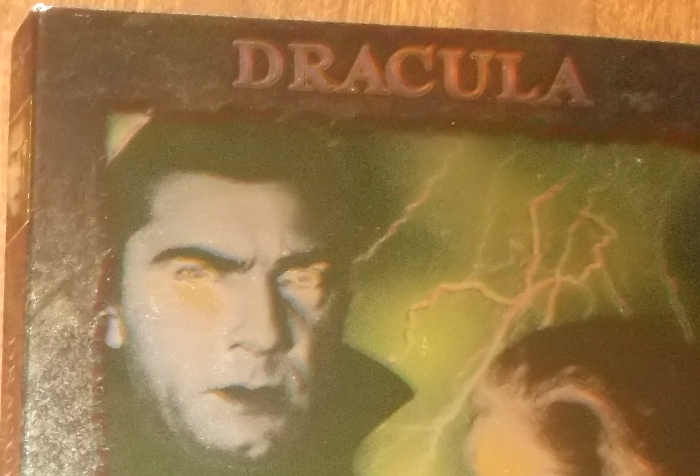
31 Days Of Horror: Dracula

While filmmaking has obviously moved on in leaps and bounds since the 1930s, there’s still something very evocative and beautiful about the old Universal monster movies.  Dracula (1931) was the first of these, introducing us to Bela Lugosi, who is still the person everyone sees when they imagine the character.

Dracula
Bela Lugosi’s…had some strange effects applied to his face.

I just want to take a self-indulgent moment to hit the emergency Bauhaus button:

Okay, here we go with the film.

Swan Lake plays over the opening credits, which is very pretty.

The action opens in Eastern Europe, where the superstitious locals are scared about Englishman Renfield going to Vorgo Pass.  A woman crosses herself at the mention of Dracula. ‘You musn’t go to the castle, there are vampires, Dracula and his wives, they take the form of wolves and bats,’ says the innkeeper.  Renfield insists, so the woman gives him a cross to protect himself.

Not everyone’s English accent is on point in this film, though in general it’s not bad for the 1930s.

A creepy scene with some hands coming out of coffins, and immediately I’m struck by how much filmmaking has moved on since Nosferatu nine years previously – nothing in the previous retelling was as scary as this.  Some lady vampires emerge from the coffins.  Dracula is already up and about, with a strange effect of light shining in his face.

Renfield meets the coach driver at Vorgo Pass at midnight.  It’s obvious to the audience that the driver is Dracula himself.  He turns into a bat, willing the horses onwards by psychic means, then disappears with Renfield’s luggage.  Missing luggage is my pet peeve when travelling, so I can understand Renfield’s annoyance!

We get the iconic image of Dracula with his candlestick coming down the stairs.  ‘Listen to them, children of the night; what music they make,’ he says at the sound of wolves howling outside, which has become a bit of a goth cliche.  He then walks through spiderwebs without moving them.

Dracula turns out to have bought an abbey in Whitby, and Renfield has arrived to sort out the paperwork.  We then get the traditional scene with Renfield getting a paper cut.  Dracula approaches him but is deterred by the cross the local woman gave Renfield.

‘I never drink…wine,’ says Dracula, which is a gloriously campy line!

There’s a bit of a continuity problem with the geography.  When Dracula and Renfield arrive in England on a ship, Renfield having gone mad, a newspaper clipping is shown that says they arrived in Whitby but Renfield was taken to Dr Seward’s sanatorium in London.  However, when Dracula shows up in London and meets with Seward, their dialogue indicates it’s the other way round, with Seward’s sanatorium being said to be in Whitby.

The hokey effect of light in Dracula’s eyes is apparently meant to indicate that he’s hypnotising people!

The two female characters, Mina and Lucy, have a lovely character moment with Mina taking the mickey out of Lucy having a crush on Dracula, and mimicking his accent.  These kind of touches are few and far between in 1930s film!  Unfortunately it’s soon forgotten about, and when Lucy dies abruptly, Mina isn’t shown to grieve or mourn her at all.

Another striking change in the nine years since Nosferatu is the sexual subtext of the story.  This is actually more striking a change than the captions being replaced by spoken dialogue.

Renfield has been eating insects, and has moved on from flies to spiders.  ‘Who wants to eat flies?’ he says scornfully.  ‘You do, you loony!’ says the porter, who is probably my favourite character in the film.

Van Helsing appears and somehow knows exactly what’s going on with Renfield and Lucy’s death, which saves the film a lot of trouble.

Renfield is apparently allowed to wander around the sanatorium freely, largely because the porter’s not that good at his job!  As I said, I do like the porter and his maid friend, as they provide a bit of comedy relief.  ‘They’re all crazy except you and me, and sometimes I have my doubts about you,’ says the porter to the maid.

At the end of the film, Van Helsing stakes Dracula offscreen, which is a bit anticlimatic.  Maybe they weren’t able to do a good enough effect on camera back then.  ‘Aren’t you coming with us?’ says Mina’s fiancé Harker to Van Helsing as he and Mina prepare to leave the creepy abbey, but just like Dr Loomis in Halloween 6, Van Helsing still has some business to take care of (presumably staking other vampires that Dracula has created).

As a result of watching this film, Geth decided to put on the Buffy the Vampire Slayer episode Buffy vs. Dracula, and I really enjoyed the way they did all the cliches – especially Xander turning into the ‘Renfield’!

I did actually spend two hours writing a much longer version of this post, but WordPress ate it.  Thanks, WordPress software.

Back to the Halloween films tomorrow!

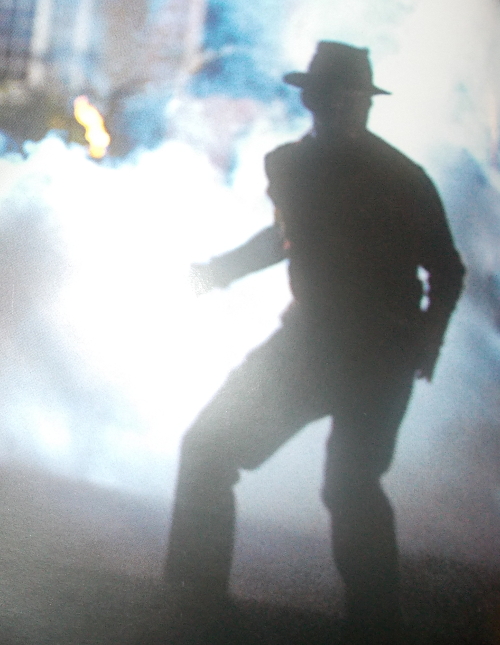
31 Days Of Horror: A Nightmare On Elm Street 2

A Nightmare On Elm Street 2 (1985) is the first film in this month-long horrorthon that I have never actually seen before.  Out of the Elm Street series, I’d seen 1, 3, 7 and Freddy vs. Jason, and most of those were when I was a teenager.  It’s a series I need to become more familiar with, especially seeing as I own the DVD boxset.

A Nightmare On Elm Street 2
The DVD boxset comes with this nice souvenir booklet with lots of cool images and factoids about the films. I should get round to reading it sometime!

The credits call this ‘Part 2’, but as that appellation became very associated with the Friday the 13th series, it seems to have been quietly dropped in subsequent merchandising.

The film opens with a loner-looking teenager, Jesse, on a school bus, being laughed at by the other kids.  It becomes apparent that this is a nightmare when the bus drives off the road and away over a field, and is revealed to be being driven by Freddy Krueger.  The ground opens up, and the bus plunges back and forth on a precipice, threatening to fall.

Cut to suburbia where Jesse has just woken up from the bad dream.  Apparently nightmares are common for him, judging by the reactions of his family.  He drives to school with Lisa, his sort-of girlfriend, and we cut to gym class, where it’s revealed Jesse is no good at sports.  He gets into a fight with another boy, Grady, but they sort of make up in a boy way while being forced to do punishment press-ups by sadistic Coach Schneider.  When Jesse explains that he’s just moved into the area and is living on Elm Street, we get some backstory from Grady: the house that Jesse and his family have moved into is Nancy Thompson’s old house.  The story around town is that Nancy went crazy after watching Glen get killed in the first film.  Jesse doesn’t believe Grady.

That night, Jesse investigates a noise in the garden, which is a very Elm Street scene – suburban gardens with lots of trellises and trailing plants.  Freddy appears, trying to influence Jesse’s mind rather than killing him – he clearly needs to use Jesse to achieve his evil ends.

Jesse, understandably, doesn’t sleep well for the rest of the night, and the next day, a boring biology class sends him to sleep.  He dreams a snake is strangling him, causing him to yell out and wake up, only to find himself holding a real snake from one of the classroom tanks.  The teacher thinks he’s messing about.

Back home, Jesse intends to go out and meet up with Lisa, but his dad insists that he clean his room first.  Jesse plays loud pop music (Touch Me by Wish and Fonda Rae, a very minor hit that nevertheless has its own Wikipedia entry) while doing so, which is not very suited to the situation – some metal or punk would be more rebellious.  This is quite a silly sequence, with Jesse singing into a pretend microphone and dressing up in daft accessories until Lisa arrives, having convinced Jesse’s mother that he’d invited her round to help sort out his room.

Jesse and Lisa find Nancy’s diary on a shelf.  Apparently the events of the first film took place five years ago, which is infuriating if you’re enough of an ’80s fan to have a keen eye for the changing fashion trends throughout the decade.  The first film was released in 1984 and this one in 1985, meaning that they both look emphatically mid-’80s.  You couldn’t even get away with saying that the first one was set in 1982/1983 and the second in 1987/1988, because the fashions and decor trends of each year of the decade are so completely distinctive.  Obviously in 1985 they had no way of predicting what the world would look like in 1989, but it’s still a real annoyance.  To me, anyway.

That night, Jesse finds Freddy’s glove in his dream. ‘Kill for me!’ says Freddy, still trying to turn Jesse into a puppet.

The next day, the whole of Jesse’s family are complaining about the heat in the house, but Jesse’s little sister tells them to shush, because the pet birds are sleeping – there’s a cover on their cage.  Unfortunately, the cage starts shaking bizarrely, and then explodes.  The pet birds go nuts and start flying at Jesse’s dad’s face to peck him, drawing blood in a nice callback to The Birds, before exploding in a shower of feathers.  Nasty.

Completely randomly, Jesse wakes up in the middle of the night and sneaks out to a nightclub.  Coach Schneider is also at the club, catches Jesse, and takes him back to school (still in the middle of the night) to make him run circuits of the gymnasium.  This whole bit is so bizarre that at first I thought it was supposed to be a dream sequence, but apparently not.  There’s lots of Adidas product placement here too, which is distracting.

After a scene where all the basketballs and tennis balls in the gym equipment come flying out to attack Schneider, he’s dragged into the showers by an invisible force.  There’s then a bizarre telekinetic towel whipping sequence, before Freddy, possessing the body of Jesse, kills Schneider.

There’s a knock on the door at Jesse’s house, and his parents answer to find the police bringing Jesse home after apparently finding him wandering naked along the highway.  The next day, Jesse’s dad fits bars to all the windows, just like Nancy’s mother in the first film.

Another dream sequence, where Jesse finds Freddy’s glove in a drawer in his bedroom, then goes into his sister’s bedroom to find her skipping to the creepy ‘One, two, Freddy’s coming for you’ rhyme.

In the morning, Jesse confronts his father, asking angrily if he knew about the previous goings-on in the house, with Nancy going crazy and Nancy’s mother apparently committing suicide.  Apparently Jesse’s dad did know about it, but didn’t care ’cause he was getting a good deal on the house.  This is pretty much the same plotline as what happens with John Strode and his family in Halloween 6, which was released a decade later, so I guess Halloween 6 copied this one.

Lisa has been busy since they found the diary.  She drives Jesse out to Krueger’s old boiler room and shows him all the research she’s done into the backstory.  Jesse is too panicked about the dreams to listen to her – he believes that he’s going crazy and killed Schneider himself.

In Jesse’s next dream, Freddy nearly gets him to kill his little sister.  Jesse starts taking pep pills to try and avoid sleeping.

Nobody at the high school seems to care much about Schneider having been brutally murdered (as we’ve seen multiple times this month, the standard motto of every horror film high school is ‘Keep Calm and Carry On’), and so the topic of conversation in the cafeteria at lunchtime is the party that Lisa’s throwing.  Grady says he can’t go, ’cause he’s grounded.

At Lisa’s party, her parents go to bed early as promised.  This results in a bizarre moment where the party gets wild and loud as soon as all the party guests see the lights go out in the parents’ bedroom.  Just as I was about to ask, ‘surely the parents can hear all of this?’, we do indeed cut to the parents in bed, looking surprised at the fact that the party kids are stupid enough to think they won’t hear anything.  However, Lisa’s mother persuades her husband to leave the kids be.  The whole sequence is a bit weird and unsatisfying.

Jesse is so stressed he’s close to a panic attack, but Lisa calms him down by dragging him into the cabana for some alone time.  However, Freddy tries to take over Jesse while he and Lisa are making out, and so he runs off, leaving her confused and annoyed.

Jesse breaks into Grady’s bedroom through his window and wakes him up.  In an awesome and much-appreciated bit of set dressing, Grady’s room is super super ’80s – triangle-patterned wallpaper with Stray Cats and Limahl posters everywhere!  Jesse makes Grady promise to watch him while he sleeps to make sure Freddy doesn’t appear, but once Jesse’s fast asleep, Grady gets bored and decides to go to sleep after all.  However, Jesse then wakes up, and there’s a grisly body horror moment as Freddy breaks out of his chest, killing Grady and causing everything in the house to explode.  This whole telekinetic power thing of Freddy’s is not very well explained – I don’t remember it being a thing in the first film.

Jesse becomes himself again and returns to Lisa’s house, but then turns into Freddy again and starts to chase Lisa.  He slashes Lisa’s leg, but Lisa can’t kill him knowing Jesse is somewhere inside Freddy.  There’s then a confusing sequence where Freddy keeps disappearing and reappearing as he goes through doorways, kills a bunch of kids in front of loads of witnesses including Lisa’s parents, then disappears again.  I’d love to know how Lisa’s parents explain that one to the police, but of course it’s never followed up.

Lisa drives to the boiler room to confront Krueger, and has to cope with a bunch of hallucinations including creepy dream dogs with human faces and her leg wound being infected with locusts.  After a final chase sequence, in which Lisa refuses to believe that Jesse is dead, keeps imploring him to fight Freddy from within, and then finally kisses Freddy (ew!), Freddy seemingly burns to death, and we get a ‘love conquers all’ victory with a burnt Jesse emerging from Freddy’s corpse.  The whole thing is a bit confusing.

Cut to daylight, where an unburnt Jesse (apart from a bandage on his arm) waves goodbye to his mother and goes off to catch the bus to school, meeting up on the bus with Lisa and her friend Kerry.  This school bus sequence is seemingly another dream, especially when Freddy bursts out of Kerry’s chest and the credits roll.  It’s just as unsatisfying an ending as the first film, with more questions than answers.

Oh, and there’s some completely out-of-place old-timey music over the credits (Bing Crosby’s Did You Ever See A Dream Walking).

Something a lot older and a bit more sedate tomorrow!

31 Days Of Horror: Halloween: Resurrection

Today’s film is Halloween: Resurrection (2002), which was the first Halloween film I was able to go and see in the cinema.  I was seventeen then, which as we saw in the last film is a notable age for Halloween characters, so it was nice that an entry in the series came out that year!  If you’re paying attention, though, you’ll notice that the film is actually set in 2001, because it’s stated to be three years since the events of 1998’s Halloween H20.  From what I remember, this was because the film was originally meant to come out in 2001, but suffered from production delays.

Halloween: Resurrection
Another ‘head lineup’ example of film promotion.

We hear about this three-year gap as part of the ludicrous opening backstory from the nurses in the mental institution in which Laurie Strode is now being held.  Apparently the man Laurie beheaded at the end of the last film was not Michael but instead a random paramedic – Michael had set this up by putting his mask on this guy and crushing his throat so he couldn’t tell anyone he wasn’t Michael Myers.  This ridiculous retcon obviously doesn’t solve all the problems with the scenario.  Watch the last scene of Halloween H20 again and you’ll see ‘Michael’ clutching his head and face, feeling that he’s got a mask on.  Why didn’t he take off the mask to show that he wasn’t Michael?  This also ruins the oddly touching moment that I discussed yesterday.

Laurie has been mute for three years, according to the nurses.  When they leave the room, we see she’s not as messed up as she’s pretending to be – she’s not actually swallowing the pills they give her, instead hiding them inside a doll.

Another patient, Harold, likes dressing up as serial killers and is constantly being caught wandering the grounds in different masks, cosplaying as his favourite psychopaths.  This raises a lot of questions about the competence of the facility.  Where is Harold getting his masks from?  Why is he allowed them?  The point of this character, of course, is to ensure that when the security guards see Michael Myers on the security cameras wandering around the basement, they think it’s Harold.  The guards are easily picked off as a result.

Despite Laurie setting up lots of traps on the roof, Michael finally manages to kill her, because when she has the chance to kill him, she instead decides she has to be sure this time and so tries to take his mask off, enabling him to stab her first.  ‘I’ll see you in hell,’ she says before falling to her death, which is a bit of an abrupt end for such an important character.

Rather cutely, Michael decides not to kill Harold, instead giving him his knife as a souvenir!  This leads into an epic monologue from Harold, listing all of Michael’s murders, which emphasises that we are still very much in the H20 continuity that ignores 4/5/6.

The action moves to Haddonfield University, where we meet main character Sara.  If you’re keeping score at home, you’ll remember that we only just had a character called Sarah in the last film.  This irritating lack of character name imagination occurs a lot in this film, as we’ll see throughout the review.

Sara’s friends Jenny and Rudy are excited about being picked for an internet broadcast called ‘Dangertainment’ that’s about to be filmed in the Myers house. ‘We could be bigger than the Osbournes!’ says Jenny, dating the film horribly.  I want to note that I absolutely hate the ‘isn’t this Web 2.0 thing new and exciting’ theme that characterised films and TV of the early ’00s.  Because information technology moves so quickly in this century, over-featuring the latest messenger software and mobile phones is an absolutely surefire way to ensure that people watching the film in twenty years’ time will laugh at the quaintness of the whole thing.  Media makers have still not really learnt their lesson about this (as shown by the number of songs in the charts at the moment that refer to things like Instagram Stories and Snapchat filters, which will have the kids of the 2020s and beyond shaking their heads and going ‘what?’), but the whole ‘wow! isn’t this technological century exciting!’ thing is not as prevalent as it was fifteen years ago.

We get a nice bit with a creepy fellow student doing the whole ‘you’re doomed!’ speech in lieu of Dr Loomis, but sadly we don’t see this character again.  Sara, meanwhile, turns out to be sort-of ‘online dating’ a high school freshman student who hasn’t told her his age.

Freddie (Busta Rhymes) and Nora (Tyra Banks) are in charge of Dangertainment.  I am pretty sure neither of them have done much acting either before or after this film.  In another bit of unimaginative naming, Nora is a very similar name to Norma from the previous film.

Most of the students chosen for Dangertainment are total idiots – Jenny is vapid and just wants to be famous, Rudy has a gory, morbid sense of humour, Bill is really pervy, Jim is really creepy, and Donna is just pretentious.  Sara is the only one who comes across as normal.  When she visits Freddie in his dorm room (Freddie’s a student?  He looks far too old, and with good reason – Busta Rhymes was thirty when this film came out!) and tries to back out of the project, he explains that her ‘normalness’ is the reason he wants her on the show, because she’s ‘real’.  Freddie is also shown to love kung-fu movies, but not quite as much as he loves himself.

Back to Sara’s ‘online boyfriend’, who calls himself Deckard, and his fellow freshman friend.  Deckard wants to stay in for Hallowe’en and watch Sara on Dangertainment, but his friend is insistent that they have to go to a party instead, because it’s a really big honour for freshmen to be invited to a party hosted by older students.  ‘Your sister invited us so you wouldn’t tell your mother about her tattoo,’ retorts Deckard, which was a line I really appreciated at the time, since a major feature of my late teens was me and my mates constantly getting tattoos that our parents didn’t approve of.

The nasty shaky primitive internet camera used for the broadcast is incredibly irritating to watch, and is another thing that dates the film now that we’re in the age of slick YouTubers!

Nora is setting the broadcast up from a small studio with lots of screens for the different cameras, liaising via walkie-talkie with a cameraman.  The cameraman is called Charley, which is another slightly-differently-spelt reused name from the previous film – this is fairly infuriating now.  He quickly gets offed by Michael, but Nora is too busy dancing to a CD she’s put on and hence conveniently turning her back on the screens to see him getting killed.

Michael Myers is ‘a mystery wrapped up in a riddle wrapped up in an enigma’, according to Freddie.  This phrase crops up in fiction a lot, but apparently originated with Winston Churchill.

The students enter the Myers house, and immediately things don’t seem right.  The ‘forty year old’ ingredients in the kitchen cupboards smell fresh, according to student chef Rudy, and there’s a creepy baby high chair with chains on it, which indicates the whole broadcast is obviously a setup.  Unfortunately the participants are a bit thick, and so they’re nowhere near close to realising this fact yet.

Deckard and his friend are clearly only at the teen party to add some visual interest and comedy relief to the film, seeing as Deckard spends the whole party on a PC watching the broadcast – other partygoers join him in watching the show as the film goes on!

Bill gets killed by Michael through a mirror, but Freddie and Nora are too self-absorbed to notice what’s happening on the screen in front of them.  The students in the Myers house find more creepy obviously-planted toys, and Rudy finally realises that the whole thing is fake.

Donna and Jim start getting it on in the basement, only to be fallen on top of by a creepy skeleton.  Watching in the studio, Freddie and Nora high-five, for the benefit of the one remaining viewer who hasn’t realised they’re the ones who’ve set all this stuff up.  Donna and Jim realise the skeleton’s fake, and Freddie decides to up the ante by donning a Michael Myers mask and entering the house.  We then get a ridiculous comedy scene of one Michael Myers stalking another.  Freddie notices the real Michael behind him, thinks it’s Charley, and has a go at him for ruining the setup, telling him to get out of the house.  Strangely, the real Michael obeys, despite there being no reason for him not to try to kill Freddie at this point.

Jim leaves the basement, but Donna investigates the hole/tunnel revealed by the fake skeleton.  She finds a news clipping about Laurie Strode, a half-dead rat (ew!) and Laurie’s doll from the sanatorium, indicating that she’s found the real Michael’s lair.  Before she can warn the others, she gets chased down by Michael and killed.

Jenny and Rudy are smoking a bong in an upstairs room, which is a flagrant breach of Scream‘s Rule 2.  Sara, meanwhile, freaks out when she thinks she sees Michael roaming around, and drags Rudy downstairs to investigate.  The fake Michael leaps out and drags Sara along the ground, but has to reveal himself to be Freddie when Rudy starts beating him up.  Sara, Jim and Rudy are angry at being set up, but Freddie implores them to finish the broadcast, promising that they’ll be well-paid.

Meanwhile, the stoned Jenny discovers Bill’s corpse, and runs out to the landing screaming.  The real Michael materialises behind her and chops her head off with a knife (grim!), meaning the other characters finally realise what’s going on.  This is the point where the students start dropping like flies – Freddie is seemingly knocked out, Jim gets his head crushed, and Rudy gets killed in exactly the same way as Bob from the first film, which is a morbid but much-appreciated callback.

It’s cute that Deckard can direct Sara around the house via old-fashioned early ’00s text messaging.  This leads to a well-done tense sequence as Sara hides from Michael.

Freddie turns out to be still alive, and he and Sara try to escape together.  This leads to a slightly cringeworthy scene where Freddie uses his kung-fu movie knowledge to kick Michael out of the window and suspend him from a cable.  However, by the time Sara and Freddie have had a lengthy debrief by the front door (WHY are they not running straight out of it?), Michael has escaped his predicament, and stabs Freddie from behind.

Sara, still allergic to the front door, goes down into the basement to play find-the-body.  Climbing up through the tunnel to the Dangertainment studio, she finds that Nora has been killed offscreen.  Luckily, there’s a convenient chainsaw stashed in the cupboard, which means Sara can carry out CHAINSAW REVENGE! on Michael…until the chainsaw runs out of fuel.

The leaking fuel sets the studio hut aflame, and Sara is trapped by a fallen table.  Must be a fairly heavy table if she can’t push it off herself.  Michael readies for the kill, but Freddie’s still not dead yet. ‘Trick or treat, motherf***er!’ he says as he blasts Michael into a burning wall, which must be the worst line of dialogue in the entire Halloween franchise.

Wrapped in a ‘horror film survivor blanket’, Sara speaks to the press (and thanks Deckard for saving her life, leading to him becoming the hero of the high school party), as does Freddie, who is a character that really shouldn’t have survived this film by rights.  When have we ever seen the idiot who decides to stir up danger actually surviving a horror film?  That character is always meant to be satisfyingly killed about halfway through the film, as penance for his own stupidity.  Those are the rules!  As a result, this ending feels very unsatisfactory.

Michael has seemingly burnt to death, but long-time viewers will know better.  In the morgue, his eyes open, and the credits roll.

Another quick break from Halloween tomorrow!

31 Days Of Horror: Halloween H20

We kick off a new Halloween storyline with Halloween H20 (1998), which ignores the ‘Thorn trilogy’ of Halloween 4/5/6.  In this storyline, Laurie Strode didn’t have a daughter called Jamie in 1981 and then die with Jamie’s father in a car crash in 1987; instead, she faked her death in a car crash sometime before 1981, moved to California and changed her identity to Keri Tate, got married, had a son called John in 1981, got divorced, and became the headmistress of a private boarding school.  Everyone caught up?  Great.

Halloween H20
A good example of the late ’90s ‘head lineup’ poster popularised by Scream.

We get a reprise of the Chordettes’ Mr Sandman playing over the opening scene, symbolising the continuation from Halloween II.  Still gloriously creepy!  The action opens in Langdon, Illinois, where Marion Whittington, the nurse from the first and second films, is still chain-smoking away.  She arrives home to find her house has been broken into, and sensibly goes to get help rather than investigating by herself.

There’s a Friday the 13th series reference as Marion bumps into someone in a hockey mask.  It turns out to be neighbour kid Jimmy, played by Joseph Gordon-Levitt in a beautifully late ’90s bit of casting.  Despite Marion’s exhortations to wait for the police, Jimmy goes straight in to explore the house.  Marion’s office has been ransacked, but nothing else has been touched; however, Jimmy spends so long nicking beer from Marion’s fridge that it’s dark outside by the time he comes out, and the police STILL haven’t shown up yet!

The power goes out as soon as Marion goes into her house, because that’s Michael Myers’ MO.  She investigates the ransacked office to find that the ‘Laurie Strode’ file is missing, and immediately realises who’s responsible.  She heads over to Jimmy’s house to get help again, but it’s too late – Jimmy has taken an ice skate to the face from Michael, and his friend’s dead too.  The police finally show up just as Michael catches up with Marion, and Michael drives away at the same moment they start discovering the bodies.

Next morning, we get a backstory infodump from the detectives investigating the case.  Marion’s house turns out to have belonged to Dr Loomis – ‘he was that shrink who died years ago, she took care of him’ – meaning that the office and the files were the property of Loomis.  Appropriately, we get a voiceover of Donald Pleasence’s monologue about Michael from the first film, along with a montage of newspaper clippings explaining what happened, over the opening credits.

A couple of notes from the credits: Marco Beltrami from Scream did the additional music for this film!  Also, there’s a photocopy of Laurie’s high school yearbook that reads ‘Class of ’78’, but it should be ‘Class of ’79’, because she was in her senior year in October 1978.

Laurie, as I explained at the start, is now ‘Keri Tate’, a headteacher in California.  She’s having nightmares about twenty years ago, and is shown still to have the scar from where Michael slashed her in the first film.

Josh Hartnett makes his first film appearance as Laurie’s son John.  He’s used to dealing with his mother’s nightmares and gets her some pills from the bathroom.  He receives a birthday card from his father, two months late, revealing that he’s seventeen.  Laurie, as you might expect, is horribly overprotective of him and is refusing to let him go on a school trip to Yosemite.

John complains to his friends Charlie, Molly and Sarah about not being allowed to go, and because it’s now the postmodern post-Scream era, we get a Psycho reference from Charlie – ‘in twenty years you’re probably still going to be living with her, running some weird hotel out in the middle of nowhere’.

Laurie is having hallucinations about seeing Michael everywhere.  This is apparently a normal occurrence, especially around Hallowe’en.  Meanwhile, the teenage characters make non-Yosemite plans, deciding to have a Hallowe’en party in the school while everyone else is away on the school trip.

We then get a scene with a mother and child attempting to use a roadside public toilet – the ladies’ are locked, so they use the gents’.  This is the standard ‘Michael needs to change cars while travelling to Haddonfield’ scene, although unusually, he doesn’t kill them – perhaps it was considered a bit too brutal, but it comes across as out of character.

Laurie turns out to be having a secret relationship with Will Brennan, the school counselor.  The school secretary Norma, meanwhile, is played by Janet Leigh, who was Jamie Lee Curtis’ real-life mother and whose most famous role was Psycho shower victim Marion.  I’m very fond of this particular horror callback!

LL Cool J is, I believe, the earliest example of the curious trend of late ’90s/early ’00s slashers featuring R&B stars who weren’t generally known for their acting.  In this film, though, it’s an inspired choice – his characterisation as Ronny, the security guard and wannabe novelist, is hilarious, with him constantly on the phone to his wife reading out the bad erotica he’s been writing!

John has Ronny wrapped around his little finger, and persuades him to look the other way while he and Charlie sneak out to town to get supplies for the party.  Laurie is also in town, and is clearly freaked out by the kids in costumes roaming the streets.  On her lunch date with Will, she turns out to be using alcohol to deal with the stress, sneaking an extra glass of Chardonnay while Will is in the bathroom.  I quite like this character beat.

In case we hadn’t guessed, John then explains to Charlie that he can’t steal booze from Laurie’s cupboard because she’s a ‘functioning alcoholic’ and would notice if it went missing.  Charlie goes shoplifting for it instead, which is a pretty good indication he’s not going to survive this film.  Laurie catches them in town and drives them home, and we see Michael Myers brazenly pulling up in his car right behind them at the school gates.  Nobody notices for some reason.

John meets up with girlfriend Molly to show her his decorations for the party – he’s excited as he’s never celebrated Hallowe’en before.  In class, Molly reprises Laurie’s classroom scene from 1978 – she sees Michael Myers staring at her from outside, but is distracted by being asked a question by the teacher (in this case Laurie, who apparently teaches English class as well as being headmistress – the class discussion is on Frankenstein, because postmodernism!).

At the end of the class, Laurie reveals that she’s changed her mind about Yosemite, and gives John the permission slip.  He’s already decided he’s not going, though, as he wants to party with his friends.  The school clears out for the trip, leaving the building deserted.

Laurie bumps into Norma, who repeats the Sheriff Brackett line from 1978 (‘it’s Hallowe’en…I guess everyone’s entitled to one good scare’), and then launches into an absolutely shameless Psycho callback sequence.  ‘I know it’s not my place, but if I could be maternal for a minute…we’ve all had bad things happen to us,’ she says to Laurie, then gets into the car she drove in Psycho, while the Psycho soundtrack plays in the background!

Ronny finally notices Michael’s car, and goes out to investigate.  I love how Michael just casually saunters past him while he’s checking out the car!

The phone lines are cut, cutting off Ronny’s wife, which is a shame ’cause she’s one of the best things about this film.

Laurie sees Michael approaching her, and assumes she’s hallucinating again.  Before she can wonder why she can’t get rid of the hallucination as usual by squeezing her eyes shut, Will shows up, and they decide to go back to her place once he’s checked on the students staying behind.

In Molly and Sarah’s dorm room, they’re watching the video of Scream 2, because this is the late ’90s.  This, incidentally, results in one of those fictional universe paradoxes where, as we saw yesterday, the Halloween series exists as a fictional story in the Scream universe, and as we see now, the Scream series exists as a fictional story in the Halloween universe.  I would love to see the version of Scream that exists in the Halloween universe – it’d be a very different film without all the Halloween references!

Sarah stubs out her cigarette just as Will enters the room.  There is no way on earth he wouldn’t be able to smell it!

Back at home, Laurie has a whole tumbler of vodka plus a swig of gin to calm her nerves.  Will shows up with a pumpkin, and suddenly Laurie doesn’t seem so against celebrating Hallowe’en.  She tells Will her backstory, and suddenly realises that both she and her sister Judith were seventeen when Michael came to kill them, the same age that John is now.  Freaked out, she tries to call the Yosemite trip to make sure John’s okay.  The phone lines have been cut, and she notices that John never picked up his camping gear.  Laurie immediately grabs a gun, and nearly ends up shooting Ronny, who has come to her house to report about the strange car.

About five different characters say ‘I’ll be right back’ in this film, which is probably another Scream reference.  Charlie dies offscreen, and after discovering his body, Sarah gets chased down by Michael, leaving John and Molly the lone party survivors.  They escape through a window, and Michael gives chase, slowing them down by stabbing John in the leg.  There’s a brilliantly tense sequence where they’ve managed to get through a locked gate but can’t open the door behind it, meaning they have to cower from Michael trying to stab them through the gate.  Laurie gets them through the door just in time, and the small window in the door allows her to come face-to-mask with her brother for the first time in twenty years.

‘Do as I say, now,’ orders Laurie as she ushers John and Molly into a locked room, which is exactly what she said to Tommy and Lindsey in the first film when hiding them in the same way.

Will accidentally shoots Ronny, apparently killing him.  This has become a bit of a theme in these films!  As they’re checking Ronny’s body, Michael sneaks up and kills Will.  Laurie manages to escape with John and Molly in her car.  At the school entrance, she gets out of the car to open the gate.  ‘I want you to drive down the road to the Beckers, get them to call an ambulance and get the police,’ she says to Molly, paraphrasing words we’ve now heard many times during this horrorthon!

Laurie stays in the school to confront Michael, grabbing an axe to fight with.  After a lengthy fight sequence around the school, where it’s no longer clear who’s chasing who, she seemingly manages to kill him, and then drops the damn knife AGAIN, just as she was always doing in the first film.  Luckily, though, she has another one, and goes down to make sure she’s finished the job.  Unfortunately, just as she’s about to stab Michael, Ronny shows up and stops her, apparently not dead after all.  To be honest, I don’t think stabbing Michael would have killed him – he’s too superhuman for that.

Ronny, despite having been shot several times, seems perfectly fine in the aftermath, chatting away to his wife on the phone about his new idea for the ‘erotic thriller’ he’s going to write!  Maybe Will was just a really bad shot.

Despite the fact that hundreds of police and ambulance workers have shown up to deal with the situation, Laurie decides to take matters into her own hands and drives Michael’s body away in a van so she can kill him properly.  When she sees him wake up, she brakes hard so he goes flying through the windscreen, and then runs him over, sending the van crashing down a hill into a tree and jumping out of the van just in time.

After the crash, there’s a sort of oddly touching moment where the trapped Michael reaches out a hand to Laurie, and she reaches back, nearly touching but not quite.  Then she chops his head off with an axe, which is the only sensible way to deal with Michael Myers, and the film ends.

Incidentally, this is the second Halloween film in a row that has an ‘In Memory of Donald Pleasence’ caption during the end credits.

Another Halloween film tomorrow!