Race Recap: Middlesbrough Half Marathon 2026

I was happy with this race given the last couple of months.

The aim of this one was always to see where I was after a winter of non-specific baseline training, as my main aim for 2026 is to make big improvements in my half marathon time. What I didn’t expect was that I wouldn’t really have that winter of baseline training, as I had to reduce my mileage drastically in January and February in order to sort out a hamstring/glute niggle. As such, while I might have expected to scrape a sub-2 on normal mileage, I thought this week that I would probably end up somewhere between 2:05 and 2:10 – and that was pretty much bang on. Due to the lack of training I knew I had to stick to a steady effort with no heroics, so I’m really pleased with how the race went.

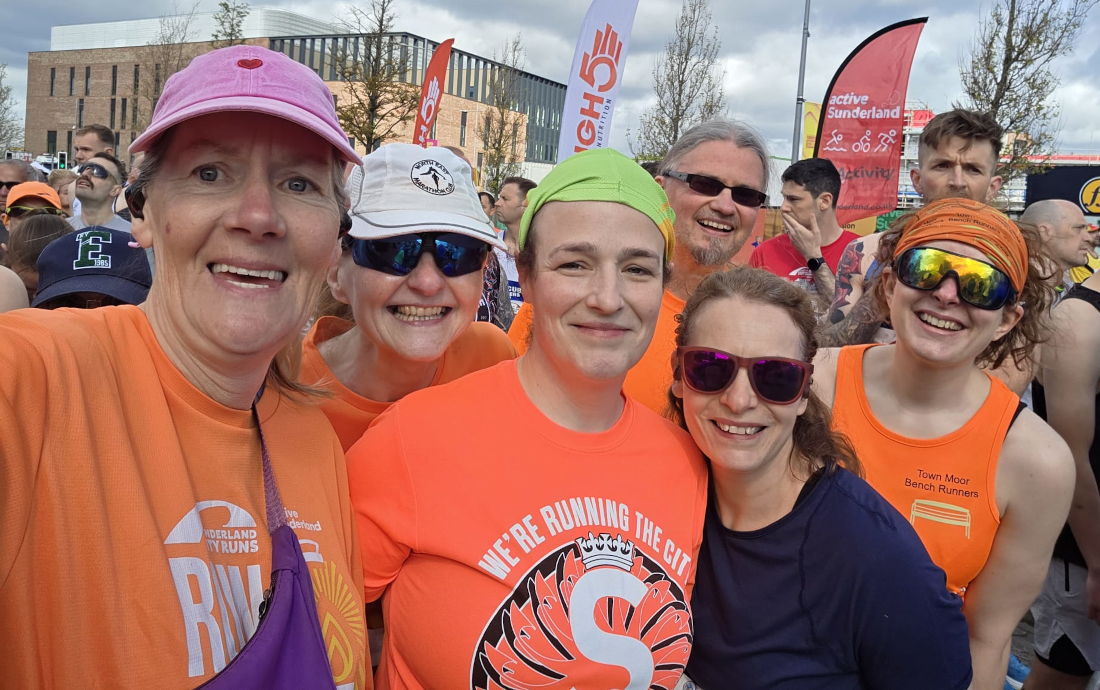
Pre-race selfie. Don’t have one where I don’t look a bit anxious!
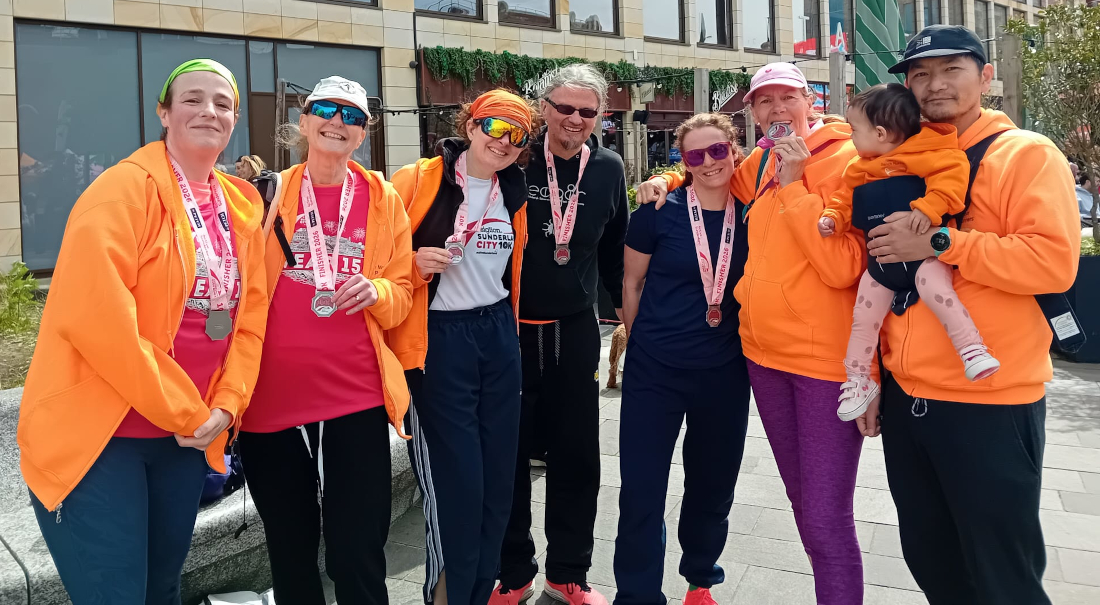
A bit of the race HQ atmosphere.

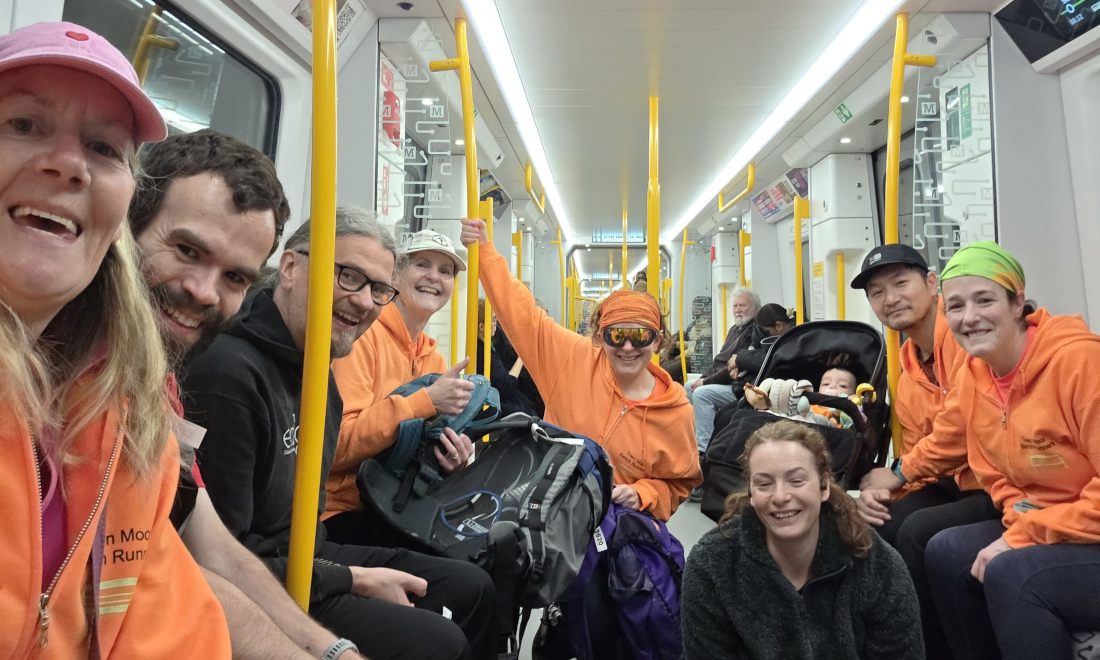
I felt at the start like I didn’t know anyone (Middlesbrough is a bit further south than I usually venture for ‘local’ races) but it was nice to spot a few people I knew during the race and say hi.

The last few miles were a bit tough, but that’s to be expected given that I’ve not run more than 10 miles at a time since Amsterdam Marathon in October!

The hamstring twinged on occasion, but 99% of the time I didn’t notice it. Hopefully it’ll be manageable from now on.

I also didn’t feel sick 🎉🎉🎉 I was a bit crampy on occasion but no nausea. My start line gel was Active Root non-caffeinated gel mix (which did give me the usual annoying gassy aftertaste for the whole race so I’ll try something different next time) and my in-race fuel was Tailwind (which worked great, but I need to drink more of it per fuel point as I still had some left at the end).

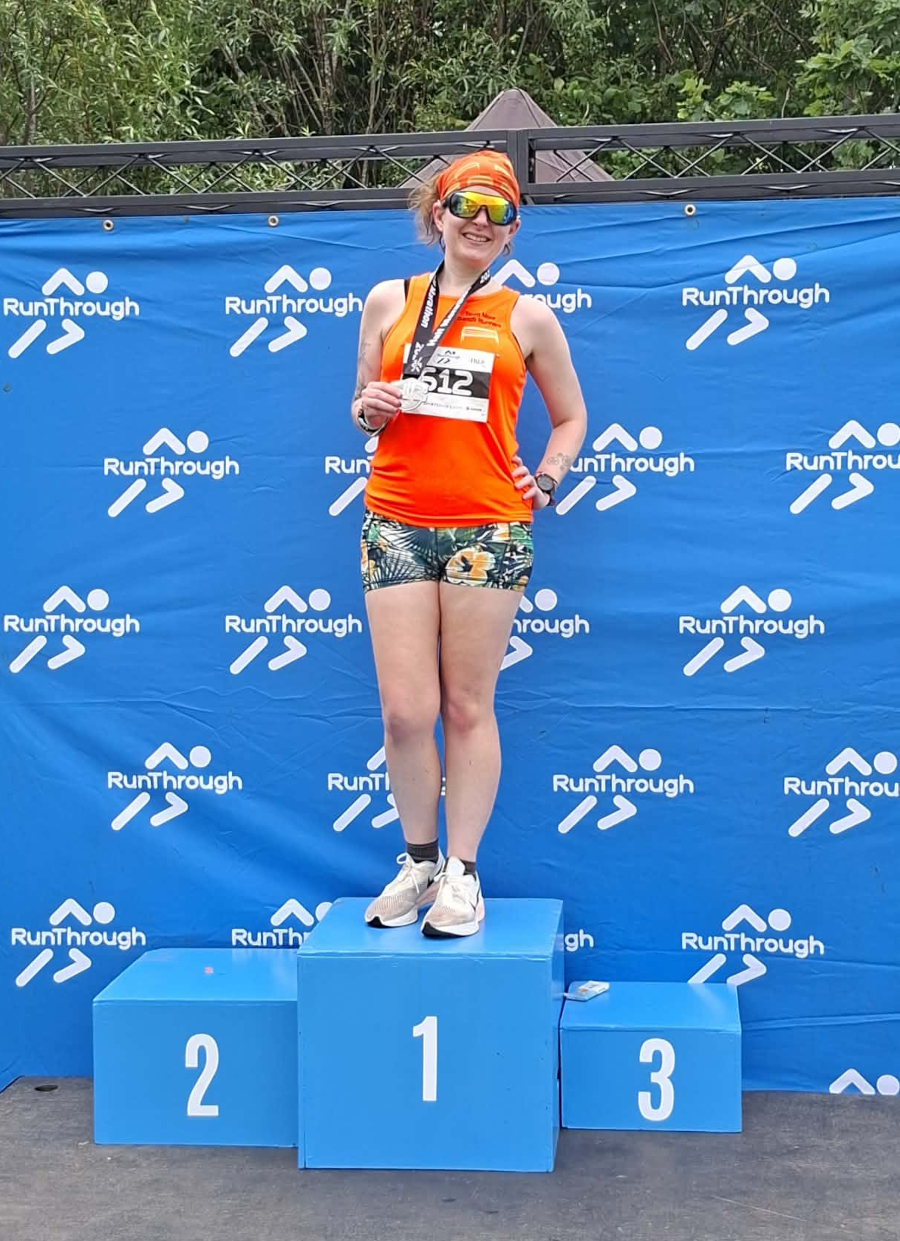
Official race photo from RunThrough. None of them are super flattering but you can see I’m trying!

The course is very much recommended. It’s nice and flat other than some minor flyover inclines around the halfway point. There’s not a massive amount of crowd support, but it’s great when it’s there. There’s a mile 12 out-and-back with a very similar vibe to the mile 12 out-and-back at the Edinburgh half (i.e. when the HELL is this thing going to have a turning point?), but in general I’m a fan of out-and-backs as you can concentrate on looking out for people.

The only slight issue was that all the mile markers from 5 to 12 seemed to be slightly early, each appearing about 0.2 miles before they were expected. (I know watch GPS isn’t totally accurate but I also know the inaccuracy pattern of *my* watch and I’ve never seen early markers before!) As such, I expected the race to measure slightly short by GPS – but the 13-mile marker more than made up for the shortfall and my watch ended up reading 13.3 at the finish, which is what I would typically expect.

Overall, it was a really great race. I’ll be back sometime when I’ve got better fitness.

Now for a week of recovery (or a fortnight if I feel I need it – I’m trying to listen to my body more) before training begins for the next one.

Race Recap: HogmanHoway 5k 2025

This was the inaugural (I hope) running of this event, held in the evening of Hogmanay in the centre of Newcastle. I never thought about doing a New Year race before but it was a great atmosphere!

Not a PB race – too congested and too dark – but at this time of year we were after a fun run instead, and this delivered.

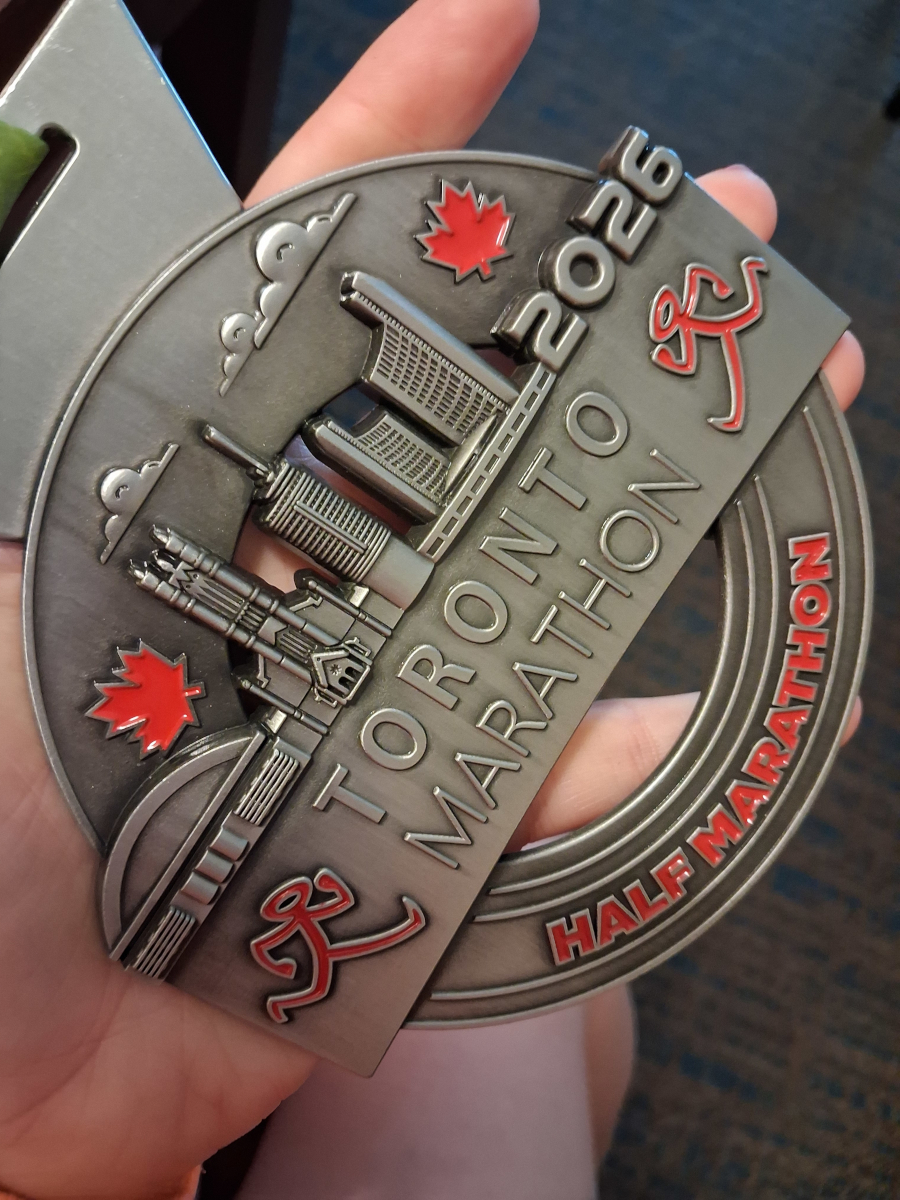
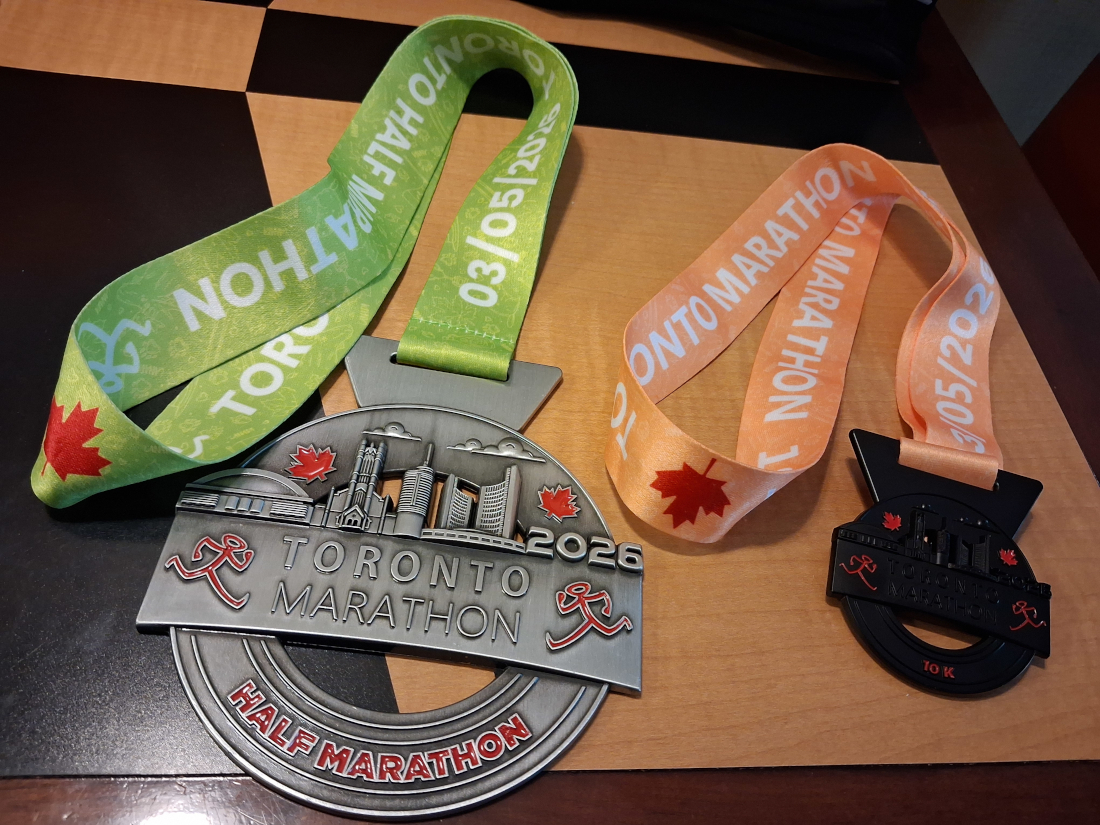
Nice medal to end the year!

I am properly hibernating for the rest of the winter now. Training break for two months (just keeping things ticking over via my usual run schedule) and then a baseline half marathon to see where I am, because that will be my main focus for 2026. Looking forward to it.

Race Recap: Leeds Abbey Dash 2025

I wasn’t really feeling this one going in!

Geth and I booked it in May after feeling a tiny bit disappointed with our Sunderland times (I was still of the belief at that point that I would be getting a PB at every distance in 2025 like I did last year… I have since been roundly disabused of that notion!). After a hectic autumn, heading off to Leeds to race a 10k in the cold was the last thing we wanted to do. Nevertheless, we decided to make a weekend of it – there was a Christmas market, after all, and we seem to be collecting those this year.

Start line!

Despite the forecast, I didn’t feel as cold on the start line as I did when we last raced this one in 2023. I was in a vest last time, mind, whereas this year I went for a longsleeve. It used to be a mid-October race but Run For All have taken it over this year and moved it to the end of November. This did result in an improved course by our standards (the start was right outside our usual hotel and there was no hill towards the end) as the route had to avoid the Christmas market.

It was one of those races where I chose not to look at my watch at any point, ran the whole thing on feel, and tried not to second-guess myself by looking at the pacers. The result was a fairly steady run, a negative split according to the results, and a consistent 50:25. Three seconds slower than Sunderland, which is a bit annoying, but I honestly didn’t expect to be anywhere near 50 minutes. I have found it really hard to recover from Amsterdam over the last month, and I’ve been suffering a bit in the colder weather with my asthma – my interval paces have been much, much slower than usual – so I just didn’t think I’d be able to run at a faster pace. Apparently I was wrong.

The fact that I can pull out a 50ish minute 10k after far-from-ideal training has given me a lot of confidence for next year. Overall I’m really happy with that race. Not at all what I expected!

Thoughts on not marathoning again for a while (and the state of my running in general)

I’m a week past the Amsterdam Marathon now, and it’s been a difficult week. Physically, I’ve felt like I haven’t bounced back like I usually do – I’ll be sticking to short efforts (no more than 3 miles and usually 1) for at least another week. Mentally, I’ve felt terrible. I wouldn’t say I feel ‘disappointed’ about what happened in Amsterdam – that’s the wrong word, because I do feel proud of what I did to handle the circumstances on the day – but I am sad, because it was a bit of a wasted chance to do well (the weather was perfect and it’s an amazingly flat course) and frustrated, because this nausea issue is going to be difficult to solve (and it feels like as soon as I solve one issue with marathon running, another crops up, and this is just the latest).

Amsterdam debrief

I think there were three main reasons why Amsterdam didn’t go to plan:

1) The nausea, which was the main problem. This was caused by my fuel, as was the case at the GNR.

2) Fatigue around halfway, caused by going out too fast, caused by running with pacers. I think following the pacers was probably a bad idea (especially on an already congested course like Amsterdam because running with a pace group means you waste energy tripping over feet and manoeuvring around people). I don’t usually run with pacers, so I don’t know if they always go off a bit fast, but it was the case on this occasion. I need to get better at pacing myself.

3) I believe my easy pace in training was too slow, especially on long runs. A frustrating piece of advice people tend to give is ‘there’s no such thing as running your easy runs too slow!’. I absolutely run my easy runs too slow, meaning that the gulf between easy pace and race pace becomes insurmountable after a certain point in marathons. I also take too many breaks on my long runs and then wonder why it feels hard to run nonstop on race day.

Sorting these issues out

The fuelling issue

Race fuel I have tried that doesn’t work for one reason or another:

  • High 5 gels: nausea (I took eight during London 2021, felt sick during the race and had to throw up afterwards to feel better)
  • Science in Sport gels: nausea (this was so bad during Edinburgh 2022 that I became unable even to drink water)
  • Clif Shot Bloks: nausea (caused more post-race vomiting after GNR 2023)
  • Active Root gels: nausea (this is now the case with both the gel mix and the gel packets; it’s especially bad with the caffeinated version. The regular gel mix used to work for me but no longer does. Also causes breathing/asthma issues due to the consistency)
  • Kendal Mint Company gels: nausea (like the Active Root, it’s meant to settle your stomach rather than aggravate, but this doesn’t work for me)
  • ‘Real food’ like bananas, gummy sweets, Kendal mint cake: too difficult to chew during fast running (it’s fine on ultras or training runs where I can stop/slow down, but chewing during a fast effort is a no-go due to my breathing issues)
  • Tailwind: too much water to carry (I started taking this last month after the GNR and it’s not caused any gastric issues YET – and due to basically becoming flavoured water it also doesn’t cause any asthma issues, which is a real bonus – but in order to take the optimal recommended amount during a marathon I would need to carry two litres of water with me, i.e. 4x 500ml flasks. I don’t like running fast with a hydration vest on so this would probably require two waist belts and might thus trigger spondylitis flare-ups, as those only generally happen now when I’m carrying too much weight on my lower back)

(Side note: people who say you can ‘train your gut’ also get short shrift from me. The only thing my gut seems to be able to train itself to do is to become LESS tolerant of fuel types over time.)

Some strategies that I could try in marathons going forward:

(Most of these are based on the assumption that I will continue to have no gastric issues with Tailwind, which is not at all a guarantee based on my history.)

  • Consume the optimal recommended amount of Tailwind water by having a crew along the course who could swap my bottles out (this would be a bit fiddly but with planning it could be done)
  • Consume only half the recommended amount, as some fuel would be better than none (this would probably be the best bet if I am able to continue with the Tailwind)
  • Consume no fuel at all (this was a strategy I googled in desperation earlier this week to see if anyone has had success with it. I do believe that if I hadn’t fuelled at all on Sunday, I would have finished with a better time than I did – but, of course, still far from an optimal one)

None of these are ideal but they’re all I have to move forward with for now.

Learning to pace myself better

This is sort of the easiest thing to fix and also sort of the hardest. I hate pacing myself because it requires constantly looking at my watch and getting really stressed (I’m not capable of pacing on feel). But I need to try. It may be helped by the next fix.

Making my easy pace faster

I’ve written before about my slow easy pace and the fact that friends doing similar race times have faster easy paces than me. I have always believed that easy pace should be ‘what comes naturally’, and for me that is highly variable from day to day (mainly due to the spondylitis). However, I am really starting to feel that bridging the gap from slower than 11 min/mile on easy long runs to 9ish min/mile on marathon race efforts is too much to ask of my body. I’ll be doing more work over the next year or so to speed this up, which will probably mean cutting out some of my weekly social runs and focusing more on solo running.

Changes to the running plan for the next couple of years

Focusing on half marathons

A large part of planning out the race season is liaising with Geth on the races we want to do, as it’s nice to do race weekends together, even though we’re generally working on different goals. He was also unhappy with the way Amsterdam went for him and wants to take some considerable time away from marathons (probably longer than I want to take!). Pre-Amsterdam, we’d already planned a marathonless 2026 as we both already felt in need of a break and a year dedicated to shorter faster efforts.

As such, next year is already planned out, though I will be tweaking it to increase the focus on half marathons. After that, Geth is keen to start collecting the SuperHalfs. They’re all tough to get into now so that will likely be a project that goes on for a decade or more, but it will be a fun one and will scratch the same ‘race weekend’ itch as travelling to do big city marathons.

As I say, I will be changing next year’s schedule slightly – I looked at it immediately post-marathon and thought ‘why am I planning to run so many 10ks? I hate 10ks!’. (I have a 10k as my final race of 2025. We’ll see if that changes my feelings but I doubt it.) I may run as many as four half marathons, and I’m also considering an extra race at the end (see ‘New rules’ section below).

New rules

As Dua Lipa sang, I got new rules (I count ’em). I do not want to be in the place I was during the Amsterdam Marathon again. Next time, I want to give myself a much better chance at the sub-4. As such, before I am allowed to sign up for another marathon, I have to achieve the following things:

1) Be able to run consistent 1:50ish half marathons with the same ease that I can currently hit consistent sub-2s. One of the warning signs during my preparation for Amsterdam this year was that I failed to hit my time goals on both my half marathons, coming in at 1:56:00 on both occasions. I knew I needed a 1:50ish to have any hope of converting to a sub-4 marathon and I didn’t get it. I should have heeded that warning and adjusted my expectations a little.

2) Further to this, run a half marathon PB that is closer to 1:45 than 1:50. The aim is to add to the consistency and confidence.

3) Race a metric marathon (26.2 km i.e. 16ish miles – I am looking at the Chester Metric Marathon for this, possibly as early as next year) at marathon goal pace effort without significant fading and without fuelling/nausea issues.

4) Following this, race a 20-miler (race suggestions welcome!) at marathon goal pace effort without significant fading and without fuelling/nausea issues.

The idea is that I basically take what I can already do in the half marathon (stay fairly steady the whole way) and build it up gradually through the distances. It’s a big jump from half to marathon, and I don’t think solo training runs have been enough to bridge that for me. Perhaps race efforts will.

Why, after all this, am I still so keen to do marathons?

As I mentioned in my race blog, my memory of the actual race effort in Amsterdam is very blurry and fuzzy, especially the very dark nausea-ridden miles from 15 to 21. However, one memory does come to the fore, mainly because I remember begging myself to remember:

Remember how horrible this feels. Please don’t do this to me again. We already ran two nonstop marathons last year – we’ve achieved that goal. We’re not doing that today, but it doesn’t matter. We’re not hitting our goal or even getting a PB today, but it doesn’t matter. Please let’s just get to the end and then never sign up for a marathon ever again.

So why, from the comfort of my sofa, am I planning (long-term) not to listen to that memory?

Of course I’ve already forgotten how horrible it felt physically. That’s human nature, because we need to be able to keep doing things that are physically hard. But I haven’t forgotten how I felt mentally. I felt wretched and broken and like a failure, and yes, I absolutely don’t want to feel like that again. But I know, from occasional previous efforts – well, at least one – that it is possible to run a marathon and not feel like that. Or not quite that bad, anyway.

If I had achieved my sub-4 at Amsterdam, the five-year plan would have continued onwards, and I would have kept the spark of hope that I could achieve a London GFA while in my current age category. That plan has gone now – I recognise that it is too ambitious for the place I’m currently in, though I’m still hopeful that I will be able to maintain enough consistency to achieve it in some future decade.

But I’m still dead set on a sub-4 for another reason: it’s the last of the big mid-pack time barriers I still need to break. Sub-30 5k, sub-hour 10k, sub-2 half – they all fell some time ago, and while I’m still eager to whittle down the 5-minute increments, it’s not quite the same. Short of a genuine miracle, my 5k PB time will always start with a 2, 10k with a 4, half with a 1. The marathon is still there for the taking. I know it’s only a number. But numbers can haunt you, and this one haunts me.

It’ll have to haunt me for a while yet though. There’s lots of work to be done.
Race Recap: Amsterdam Marathon 2025

This race didn’t quite go to plan.

The marathon weekend logistics were great, the expo was great (we went on the Friday as we always do; you don’t want to be queueing for hours among the Saturday crowds), the training block had been… mostly okay. I had to cut a few long runs short and change a lot of things around with fuelling plans in the fairly late stages due to nausea causing issues at the GNR, but it had gone better than my Yorkshire block last year. Or so I felt, anyway.

I was attempting sub-4 again, but anything faster than my PB (4:16:30) would have been… acceptable.

Race morning was straightforward. Very early start for an early starting time, but I was fine with that – I prefer races to start earlier than later. It was a bit of a pain to get to our wave’s baggage area, but we were settled in the start pen in plenty of time. I left Geth at the front of the wave and headed to the back to find the four-hour pacers.

Start line!

Once we got going, I stuck with the pacers (as planned) for the first half; they were going a bit too fast but it was comfortable-ish. Nevertheless this may have contributed to fatigue at halfway.

The first half felt like it flew by, but it was really congested, especially in our large pace group. The uneven ground (features of Amsterdam roads include tram lines and uncovered neat holes about half a foot across – and I’m really not sure of the reason for the latter!) didn’t help, and at least one person went flying fairly early. It was quite a bit of extra effort to avoid other runners. I didn’t really notice the landmarks as I was focusing so hard on the pacers’ flags and trying not to fall too far behind (which again was tough due to the congestion).

There were lots of runners asking/commenting about the Town Moor and/or Newcastle due to my Benchie club vest! Even spoke to a guy who turned out to know our club captain Ed 😀

I really started noticing the aforementioned fatigue at about ten miles. Due to this, I had to drop the pace a little as I approached the halfway point. I had already given up on sticking with the pacers, as they really did seem to be intent on keeping up the slightly-too-fast pace (most of my splits were registering on my watch as about 8:30 minute miles while I was running with them). I eventually went through the halfway point in bang on 2 hours and by that time they were completely out of sight.

I could probably have toughed the rest of the race out for somewhere between 4:10 and 4:15 if not for the hideous nausea that has been a feature of pretty much all my long pace efforts this year. Every kind of fuel makes me feel sick (or is otherwise unusable/problematic) on fast long races. Every single thing I’ve tried. And given that you can’t do fast long races without mid-run fuelling, this is a significant problem that needs a lot of work and thought. I’ll be expanding on this in the next blog post.

By about 15 miles in, running at any pace for more than 0.2 of a mile at a time made me want to collapse against the nearest tree and vomit up the entirety of my internal organs, so walking it was. I channelled my friend and clubmate Clare and powerwalked as fast as I could, with occasional run breaks when I could stand it. This made me feel a lot better nausea-wise, though I could have done without all the supporters constantly telling me to start running again.

My memory of the race throughout this section is honestly very blurry and fuzzy. Strangely, even though I had slowed significantly due to the walking, the miles seemed to be ticking by faster than ever, and it felt like the race flew by quicker than my two faster marathons in 2024. I remember the last few miles of the Walt Disney World Marathon feeling similar even though that was very slow, so maybe it’s just what happens when focusing on run-walk intervals.

Finish line crossed at 4:45:29. I pulled off an epic sprint finish with bags of energy left, so I know I did have a lot faster in me. Not my day though.

Back of the medal. Unlike the GNR medal this year, it does appear to depict the correct city. However, my race was definitely not a ‘masterpiece’.

In hindsight the warning signs were there in training. I’ll be switching to shorter stuff for a while but this one’s given me a lot to think about.

I usually do a debrief at the end of race recap blogs, but there’s a lot that needs to shift with my running in general so I’ll put all of those thoughts in a separate post.

Race Recap: Great North Run 2025

Not an ‘A’ race, but this one did still feel important.

I wanted a significant PB of about five minutes. I got a 1:55 at the GNR last year, tried for a hugely ambitious 1:45 at the Edinburgh half this spring (and failed with a 1:56) and decided to aim for 1:50ish this time round. My main aim for this autumn is a sub-4 at Amsterdam Marathon, and I felt I needed closer to 1:50 than 1:55 in order to give myself some confidence for that.

Geth was happy to run 1:50ish, as it was just a little faster than marathon goal pace for him (he’s going for 3:45), and so we agreed that he’d pace me. I told him not to slow down for me if I was struggling to match the pace, as I hoped to be able to catch up if that happened.

As it was clear that the start area would be organised similarly to last year (which was pretty chaotic), we arrived in plenty of time, with the aim being to get into our pen an hour before the cutoff time. We had time to chat to friends in the baggage bus area, which was great and made me a lot more relaxed, and then made our way down to the orange pen entrances. Being so early meant that we were right at the front of our wave, which was also a good thing – I found during the race that I was exactly where I should be, as I wasn’t needing to overtake lots of people or being overtaken myself.

Pre-race. After a bit of drizzle last year it was back to the heat and sunshine for 2025.

Once the race gets started, being in one of the faster waves means you don’t have to wait too long to get going (I remember my pink wave days… that long hour of shuffling was not fun!) I felt a lot better once we started and felt comfortable at the planned pace for the first few miles. Our friend Andy ran with us over the Tyne Bridge and I was able to chat happily without getting out of breath.

Once we approached three or four miles, though, Geth was pulling away from me, and while my perceived effort remained the same, I couldn’t catch him. By that I mean: I tried to make my legs go faster and they wouldn’t. It doesn’t matter that I can run at a much faster pace during a shorter effort. If my subconscious knows there is energy that needs to be conserved, it will not allow my legs to go at a pace that might result in burnout. This is frustrating, but it’s not something that I’ve worked out how to overcome yet, and it makes me nervous about the marathon – because if that part of my brain decides on the day that I’m not capable of the goal pace, then I won’t be capable.

I carried on alone at the same level of effort. Close to halfway, I started to feel sick. I’m aware now that this was a combination of (a) the aftertaste of Active Root gel mix, which is something that always makes my throat feel a bit gassy and unpleasant and thus affects my breathing, and (b) the fact that this particular flavour of Active Root gel mix had caffeine in. Annoyingly, this caffeine in the gel mix had provided a really useful boost during my slower long run the week before, but now that I was running at a fast race pace, it was making me nauseous. As such, I couldn’t face taking on any more gel during the second half, and stuck to water instead.

About nine miles in, holding steady.

While my pace did start to feel a bit ploddy, I stayed as strong as I could for the rest of the race. I didn’t look at my watch, because I didn’t want to start panicking about the pace. While I knew 1:50ish was out the window, I hoped I would at least get a PB – but it wasn’t to be. I finished in 1:56:00 bang on, the same time as the Edinburgh half. Consistent, but not what I wanted. However, I am pleased that my mile splits were pretty even in general and I didn’t suffer a slow fade like I had in Edinburgh.

At the medal point. A bit disappointed but did my best on the day.

I’m not sure how to feel post-race, especially now it’s been another couple of weeks and I’ve done another couple of long runs that haven’t quite gone to plan. I know Amsterdam is much, much flatter than Tyneside, I know I’ll be tapered (although being tapered hasn’t always worked for me in the past, so…), I know that I’ll be starting out at a pace that’s a whole minute per mile slower than I started the GNR… but there are still far too many unknowns for my liking. I’ve not cracked my fuelling yet (i.e. found a strategy that gives me enough energy while also not making me sick). I know now after the GNR that it’s not as simple as just sticking with a pacer through hell and high water. I don’t know if I can drown out the part of my brain that insists I can’t possibly run so fast for such a long way.

One month to go. I’ll soon find out!

Race Recap: Great North 5k 2025

I automatically typed ‘2015’ first. This race has always been associated with that year for me, because it was my first ever race, ten years ago this month. I’ve thought for some years that I would do it again to celebrate the anniversary.

Ten years ago, the Great North 5k was part of the weekend’s Saturday events, along with the kids’ races, the CityGames and the pasta party. These days it’s just the kids’ races on the Saturday, and the pasta party is no longer in existence (a shame – we used to go and claim about eight bowls’ worth with our GNR tokens!). There’s no more CityGames either, but they do host a couple of elite races on the Friday night before the mass 5k starts, so it’s fun to go along early and spectate on the elites.

The course this year was exactly the same as in 2015 – something I was delighted about, as so many races have drastically changed their courses over the years – though friends who have run it in the interim tell me that it has differed slightly from time to time.

One of the special waves in this race nowadays is in association with Northumbria University, who provide special t-shirts for their team running in this wave. Several Benchies were running in the Northumbria wave this year, as well as a couple of us running independently, so it was a good club turnout!

A couple of club pics pre-race! Photos from Clare at TMBR.

As it was ‘only’ a 5k (not how I would have described the distance ten years ago!) and not a goal race, I felt comfortable breaking the ‘nothing new on race day’ rule by trying out my new Vaporfly 3s prior to their big test on the Sunday. I didn’t notice I was wearing them during the race, which is exactly what I want from race day shoes (the speed boost from the carbon plates is nice, but the comfort is the real reason I wear Vaporflys).

I ran at about 90-95% effort and sneaked in just under 25 minutes – nowhere near my PB, but I’m not in 5k PB shape at the moment (hopefully next year). That’s more than ten minutes faster than in 2015, which is not bad for ten years older 😀

Post-race with Izzy (she got a PB!) and the Tyne Bridge in its GNR getup. Photo from Izzy at TMBR.

I’m really glad I ran this race – not just to celebrate my anniversary, and not just because I had such a lovely time with so many friends running and spectating, but also because I had very deliberately taken the summer off racing in order to give myself a break from it – and so I was out of the habit and felt nervous about the logistics again! Easing back into it with the 5k meant I was much more relaxed going into the GNR proper on the Sunday.

But that’s another blog 😊

Race Recap: Edinburgh Half Marathon 2025

Let’s start positively. I’m really proud of the training block I did for this race.

It was truncated, like all my training blocks have been post-Yorkshire Marathon (because I’ve had too many big events to train for); I only had 10 weeks to train for this one after the Bridges to Boundaries Ultra and so started at week 3 of a 12-week training plan.

I followed a Ben Parkes plan as usual. Well, I say ‘as usual’. Last year I ‘followed’ those plans by doing the weekly speed session, long run and progression from the plan and then doing an extra 25ish miles per week on top of that via the three weekly TMBR social runs and then parkrun on a Saturday. I didn’t hit my Yorkshire Marathon goal time due to fatigue on the day and concluded that I must have overtrained.

Consequently, for the Edinburgh training, I tried to follow the plan more closely. It necessitated more rest days (streak saver days for me) so I dropped down to 1-2 TMBR runs per week and made sure to fit my parkrunning and social running into the plan, rather than the other way round. I found this difficult, as it was a disruption to my long-established routine, but I did see some signs of recovery as a result. Over the course of the training, my comfortable pace changed from about 10:30 min miles to 9:30 min miles, and while I found the paces on the tougher sessions very hard, I did generally hit them.

My existing half marathon PB (set at the Great North Run last year, which was a B-race en route to Yorkshire) was 1:55:22. I felt on that day back in September that I could have pushed harder and been closer to about 1:50, but I had made a decision early on in the race that it wasn’t the right day for it. For Edinburgh, I trained for an ambitious 1:45. My thinking was ‘shoot for the moon, end up in the stars’ – I knew I would still be fairly happy with a good PB if I fell a few minutes short.

In the last few weeks of the plan, my primary feeling was that I just wanted the race to be over and done with. This was not a good sign in hindsight, but I had been training for some race or other without a break for a year and a half – ever since Manchester Marathon training started on 1st January 2024 – and I was desperately looking forward to not having to do that for a few weeks. The day to which I was counting down was not the race itself, but rather the day after – when I could finally be free of training plans.

In terms of the taper itself, I felt similarly to the way I did just before Yorkshire: that I was still doing too much hard running and not getting enough rest. Taper science is a weird beast to me, and for years now I’ve been reminding myself ‘it’s a taper, not a collapse’ because I used to do basically nothing during the taper and that also wasn’t ideal. But for my last two A-races, I have not felt like I’m supposed to feel by the end of the taper. I’m supposed to feel fresh and fidgety and ready to run and I just… don’t.

When I was packing for race weekend on the Friday, I realised I only had one serving of Active Root gel mix left in my supplies. I needed three for the race. You can only get it online, so I took a couple of Active Root energy gel packets with me for my second and third fuelling points. I had used these for the Disney Dopey Challenge (as I didn’t fancy attempting to take bags of white powder with me on an international flight) and at Bridges to Boundaries, so they had been tested… but this would end up playing a role.

(Some background context: I am very sensitive to gels. I previously used High-5 and Science in Sport and both of those always made me extremely ill on long runs. I use Active Root nowadays because the ginger settles my stomach; I also take a KMC caffeine gel on the start line because it’s similarly gentle.)

Race weekend. Geth and I did a shakeout parkrun jog at Cramond on the Saturday (I am still collecting data on whether a shakeout parkrun the day before a race works for me or not, but for the moment I am tending towards it). I felt really stiff and sluggish at the start, most likely due to the long drive the day before. I felt a little less stiff by the end, but it didn’t really feel like my muscles were waking up at all.

I hadn’t slept well on the Friday night so had no problems falling asleep at 8pm on the Saturday evening after sorting my kit bag out and getting my pasta in. Edinburgh half is an early start (they sensibly get the half runners out of the way before the marathoners reach the Musselburgh part of the course) so it was a 4am alarm! I was waking up every hour on the hour but that’s standard for such an early start.

We arrived at the start in plenty of time (it was at the main uni campus this year, not at Arthur’s Seat like it had been when we did the marathon three years ago), did a fairly ineffectual warmup jog weaving around the crowds and the buildings of George Square (many weird flashbacks to my uni days) and found a sheltered spot out of the wind for gels and activations. Then Geth and I walked to our separate pens and found ourselves opposite each other on the barriers during the wait for the race start, which was nice as we could still talk to each other. I told myself I’d feel less anxious once I was running. I tried not to think about how impossible goal pace sounded right now.

The race started, and I wasn’t long after the gun (the benefits of being a bit faster these days and thus getting myself into faster pens!). As expected, I did feel less anxious once I was running. The course went through the city centre for its initial miles this year, which was motivating.

When my watch buzzed for mile one, I saw that I was a bit slower than target pace. I decided not to look at it for the rest of the race, as it might increase my anxiety. I’m still not sure whether this was a good idea or not.

At about two and a half miles in, after the out and back at the foot of Arthur’s Seat, I could sense that I was more fatigued than I should be and didn’t have the pep that I’m used to on fresh legs. This was exactly the same thing as what happened in Yorkshire and really sent me on a mental spiral for a few miles, as the most important goal for me – and I’d said as much to Geth the evening before – was that I did not want to feel the same way after this race as I did after Yorkshire.

I took my Active Root gel mix at mile three. It was a bit vile taste and texture-wise, as I’d put too much water in the flask. Gel fail #1.

I was generally in a bad mental place for the whole way between miles two and eleven, as the fatigue didn’t let up for that whole time. I kept the effort strong but knew my pace wasn’t what it should be. I was proud of myself for getting my gel packet open while running at mile six (hadn’t practised that during training, had always used my gel flasks!) but regretted it a mile later when I started feeling REALLY sick. Gel fail #2. I didn’t take my third gel (or its accompanying water) as a result, because I just couldn’t face it. Gel fail #3.

I felt a tiny bit better by mile ten because we were approaching the final out-and-back and I knew I’d be able to see Geth coming the other way at some point. When we passed each other, I didn’t have long to go before the eleven-mile marker, which was a good target, as was the turnaround point not long after that.

Unfortunately, the turnaround point was a turnaround into the strong wind! It had been behind us most of the way so not as much of a hindrance as we’d feared during the week, but it made the last mile and a half pretty tough. Frustratingly, mile twelve was also where I felt a bit of strength and adrenaline coming back to me, but it was too late by that point. As I hadn’t drunk anything since halfway, I did end up having a bit of water from the final water station, but that was also too little too late. I kept the effort going for the whole long stretch back to the finish, waiting and waiting to see that final turn. I knew I was nowhere near my goal, but I was sure that I had at least achieved a PB.

I had not.

I stopped my watch on the finish line and finally allowed myself to look at it. 1:56:00 dead. 38 seconds slower than my PB from last year.

I felt the disappointment descend as I walked across the finish area to collect my bag and meet up with Geth. I had given all the effort I had in me under the circumstances of the day, but it wasn’t anywhere close to what I had hoped for, and I didn’t feel it reflected the training I had put in for the race.

A few days later, I am still disappointed. Lots of people have said things like ‘don’t be disappointed!’ but I feel that I’m allowed to be disappointed and to sit with those feelings for a bit. But as ever, I am regrouping and trying to work out what it means for training and goals going forward.

It has certainly taken the shine off the first week of my long-awaited training break – I really wanted to be celebrating more this week – but I think I would have found this week a bit strange either way, as not being on a training plan is really throwing me. I’m sure I’ll get used to it… just in time for the point when I need to get back on a plan again!

I am a lot more anxious about this October’s sub-4 marathon attempt in Amsterdam than I would have been if Edinburgh had gone to plan. I feel that I need at least a 1:50ish half in order for the sub-4 to feel possible. That is now entirely resting on the GNR (my only remaining half before Amsterdam) and I would have preferred that to be a bit less up in the air.

My plan for the Amsterdam training block (this was my plan pre-Edinburgh and remains my plan now except that it’s now a plan with MASSIVE ADDED ANXIETY) is to do the 15-week Ben Parkes marathon training plan but do it a week early, turning it into a 16-week plan with an extra week of taper at the end in order to get more rest in. My theory is that my various chronic conditions (in particular the spondylitis) necessitate more rest than the average person in order for me to feel properly fresh and tapered.

HOWEVER Geth also has a counter-theory (which he admits is a bit out there): that the taper is actually bad for my running because it makes me stiff and sluggish. His evidence for this is last year’s GNR, which I ran during peak marathon training (I’d actually done a 20-miler on the Tuesday and badly gashed my knee during a fall – so I ran that 1:55 with a 20-miler in my legs and a stiff and swollen knee, and still felt like I could have been a few minutes faster on the day!). Given that the spondylitis is meant to be kept at bay by regular exercise (though not always in my experience and I don’t think that particular bit of medical advice really holds at my level of running), it’s not a totally mad theory. This means that I’m now massively anxious that my Amsterdam plan of attack might actually leave me in a worse place.

Another aspect of the Amsterdam plan: given that I trained for sub-4 at Yorkshire and ended up with a 4:16, then trained for 1:45 at Edinburgh and ended up with a 1:56, I have decided to train for 3:45 in the hope that it will get me that sub-4. I’ve looked at the training paces on the plan and they’re very doable considering what I’ve been doing during the Edinburgh block. I’m far more confident about this aspect of the plan than I am about all the taper stuff (let’s just hope it doesn’t all unravel the first time I have to do one of the dreaded long runs with goal pace sections).

I’m not feeling great about things in general. But the best thing I can do during my five-week training break is just try and forget about all of this for a few weeks. Hopefully I can start Amsterdam training with a clearer head as a result.

(And make sure I have enough Active Root gel mix this time…)

Race Recap: Sunderland 10k 2025

I wasn’t really sure what to expect performance-wise from this one. While there’s been plenty of speedwork in my current half marathon plan, I’ve not done much short fast stuff recently – my parkruns have almost all been easyish efforts or part of longer runs for probably the last eight or nine months – and this wasn’t an A-race, just a sharpener en route to the Edinburgh half in a couple of weeks. I had no idea what kind of 10k shape I was in. It was also forecast to be a hot day.

In sum, it was pretty unlikely that I would be able to keep my streak of Sunderland PBs following my 48:59 last year. But I had to try and give it the best go I could.

In recent years there’s been a good number of Benchies doing this race and so it’s always a fun morning out. Friends are a good distraction from starting line nerves!

I started too fast (knew that would happen, it always does), settled by about mile three, resolved early on not to look at my watch until the end as I knew it would just wind me up, was suffering in the heat by the second half and felt tempted just to give up and jog it in so many times… but I stayed steady and never let the effort level drop. Couldn’t manage a sprint at the end so I know I couldn’t have done any better on the day (at least not without risking collapse). 50:22. In the ballpark of last year’s summer efforts so I’ll take it.

Trying to keep steady at halfway! Screengrab from video by Joel at TMBR.
Annual post-race Benchie medal pic! Photo from Clare at TMBR.

Might do another 10k around November or so in the hope that I can still get a PB in the distance this year once I’ve recovered from my autumn marathon. In two minds about that, though. It’s not my favourite distance!

Race Recap: Tyne Bridges to Boundaries Ultra 2025

After doing this race as my first ultra last year, I was keen to give it another go – especially as Geth wanted to do it too this time. As such, I signed up during the early bird period just after last year’s event.

What I didn’t realise when planning out my 2024 and 2025 seasons – and this is very much one of those ‘you live and learn’ things – was that doing so many marathon/ultra training blocks in a row, some of them truncated due to the races being so close together, would lead to a massive amount of cumulative fatigue towards the end of the process.

Last summer was the last break I had from long distance training – between Manchester Marathon and the start of training for Yorkshire Marathon I had about ten weeks off, during which I focused on 10k races and counted down the days until I was marathon training again because I missed it so much. I had really, really enjoyed the Manchester training block. I was already a little anxious about spring 2025 at that point, because I knew Edinburgh Half Marathon would be my A-race for the spring and I thought I would have massive FOMO about not doing a spring marathon in 2025.

One of the things I learnt last year was that I don’t really like doing too many B-races during a training block, because it gets in the way of my plan and means I have to move runs around. As such, knowing that in the early stages of 2025 we had both the Walt Disney World Dopey Challenge (a long-delayed bucket list trip for Geth) and the Bridges to Boundaries Ultra, I planned out two truncated marathon/ultra training blocks following Yorkshire Marathon: a twelve-week block for Disney and a nine-week block for B2B.

These shortened blocks meant that I didn’t really have time to recover from the last big race and build back up – after a week or two, it was straight back into the super long runs. I had overtrained a bit for Yorkshire, leading to disappointment on the day despite a PB; by the time we were into peak training for Disney, I was finding it necessary to cut a lot of the long runs short, and I found the longer Disney races to be harder work than I would have liked. I was generally happier with the B2B block as a whole than with the Disney block, as we did some good recces and I was able to sort out some longstanding issues.

However, I was becoming very aware that I barely even remember what it feels like to have fresh legs. I have been pretty much solidly marathon/ultra training for over a year now, and while I was feeling invincible for most of 2024 – the result of finally being able to run and train properly due to being effectively medicated for my ankylosing spondylitis after over a decade of suffering with it – this is most definitely no longer the case. The fatigue is real.

As such, going into the Tyne Bridges to Boundaries Ultra this last weekend – while I wanted to enjoy it as a day out with Geth as much as possible, and I did feel unexpectedly calm in the week leading up to it – I was really quite looking forward to it being over so that I could enjoy five months of NOT doing super long runs. I most definitely do not need to worry about spring marathon FOMO anymore. I will cheer my friends on at spring marathons over the next couple of months with no envy in my heart whatsoever. I am absolutely delighted that Edinburgh half will be my spring A-race, and I can’t wait to get stuck into some proper speed training for it once I’m properly recovered.

But this last Saturday morning, I still had one last very long run to do. And, despite all the fatigue, I still hoped that I could do it a tiny bit faster than last year.

As expected, I didn’t sleep well the night before due to anticipating the 4am alarm. I was waking up every hour on the hour and gave up attempting sleep at 2:30am. Geth was similar and so we had no problems being ready for the 6am drive to the race HQ at the Cycle Hub. (Registration closes at 7:45am for an 8:15am start but it’s a little harder to get a parking space if you arrive after 6:45am, and I prefer not to have any stress about getting parked!).

We gradually got registered, had a second breakfast, met up with fellow Benchies Clare and Ed and got our packs and numbers on. It was a much colder start than last year and so we made good use of the warmth inside the café! We made sure to stay towards the back of the pack on the start line so that there would be no temptation to go off too fast.

Keeping warm inside at the start! Photo from Clare at TMBR.

Geth and I ran together as planned and kept a steady pace for the first eleven miles to the Wylam checkpoint. I had a few wobbles during this section, first because there was a route change I hadn’t anticipated (the ‘updated’ GPX file I had downloaded from the website the day before the race had not in fact been updated from the 2024 route) and secondly because the fatigue was kicking in already and I was genuinely worried I wouldn’t be able to finish. However, as we approached Wylam, I felt much better, as our first planned extended walk break was coming up.

Happy to be approaching Wylam! Photo from Greener Miles Running Facebook page.

Ed overtook us at this point – we had a banana with him at Wylam and never saw him again!

Enjoying the snacks at checkpoint 1!

The next six-mile section from Wylam to Stocksfield is a mixture of fields/trails and tarmac, so we walked the former and ran the latter. The last two miles to Stocksfield is all road – and is a really depressing endless-feeling bit so we planned to run it all to get it over and done with! – but I did need a couple of walk breaks on that part as well as I was getting very tired. We had a good reset at the halfway checkpoint at Stocksfield Cricket Club, at which point Clare caught up with us.

Halfway there. Photo from Clare at TMBR.

I felt a bit stiff setting off from Stocksfield but the fields provided a good excuse to walk for a bit. The path through Prudhoe was a bit more runnable and by that point I had decided on quarter mile on-off intervals for my run-walk strategy, as quarter miles felt manageable for running and I knew that if I continued with ‘see how you feel’ walk breaks I would just end up walking the whole way back! Back at Wylam for checkpoint 3 we filled up on bananas and cola and geared up to count down the last eleven miles. I wasn’t sure at this point if my walk-run strategy would hold, but we continued onwards.

Final checkpoint, but still a long way to go! Photo from Clare at TMBR.

The final stretch actually proved to be my favourite part of the day. We were back and forth the whole time with Clare (who was doing a great powerwalking pace) and various others, so it was a lovely chatty experience, and I felt strong enough to keep my quarter miles going for the whole stretch. We had heard at checkpoint 3 that we’d be taken back over the Swing Bridge rather than the Millennium Bridge for the final half mile along the Quayside – which I was delighted about, as there was an event going on at the Baltic (south end of the Millennium Bridge) that apparently involved people chucking paint about, and I did not want to be anywhere near that! For the final (34th) mile, I suggested to Geth that we could run the last half mile and a bit to get to the finish, and my watch happened to tick over 33 and a half miles just as we came off the steps down from the Swing Bridge. It was a lovely final stretch of running along the Quayside, with the Cycle Hub getting closer and closer.

Finish line victory pose! Photo from Greener Miles Running Facebook page.

We finished in roughly eight and a quarter hours, which is a quarter hour slower than I did it last year. I wanted to be faster, but it’s okay. I felt much stronger than expected during the final stages, and I’m really proud that I kept my strategy going rather than fading to a deathmarch. We collected our medals and celebrated with Clare as she came into the finish area – it was a first ultra for both her and Geth.

Medals and a good sit down at the finish! Photo from Clare at TMBR.

A few lessons learnt on this one, besides the much larger overriding issue of doing too many marathons and ultras in a row. I spent a little too long in the checkpoints this year – ten minutes longer than last year in total, according to my moving time logs (so my moving time was only five minutes slower, not 15!). I need to plan my run-walk strategies beforehand, as I felt so much stronger and happier when doing specific intervals rather than ‘see how you feel’. A positive lesson was that I finish stronger when I fuel more frequently, so that might be something I take on board for fast marathons as well.

A larger lesson that has encompassed both the Disney and B2B training periods is that Geth and I are not really suited to doing long run training together. I am not hugely slower than him in terms of our standard distance race performances, but my natural easy training pace is much slower than his and so it’s not really been possible to find a pace that’s comfortable for both of us. This has been frustrating and upsetting at times and I think we’re both looking forward to doing separate training again for our next couple of A-races.

Geth is keen to do Bridges to Boundaries again in a couple of years’ time to try and get a faster result, but I think I’m done with this one. I suspect I’ll return to ultras again one day, but at the moment I feel it’ll be many years in the future.

Edinburgh Half Marathon next, then. I’ll be attempting a considerable PB and hopefully continuing the long process of putting the horror of 2022 to bed. For this process, I’ll be following a training plan much more closely than usual, which will involve basically halving the usual weekly mileage I’ve been doing for the last year or so. This will be a real shock to the system, but I welcome it. My body needs a break from the long distances, and I need some time to myself to partake in occasional other hobbies that aren’t running.

Really quite excited to get into the short stuff again!